
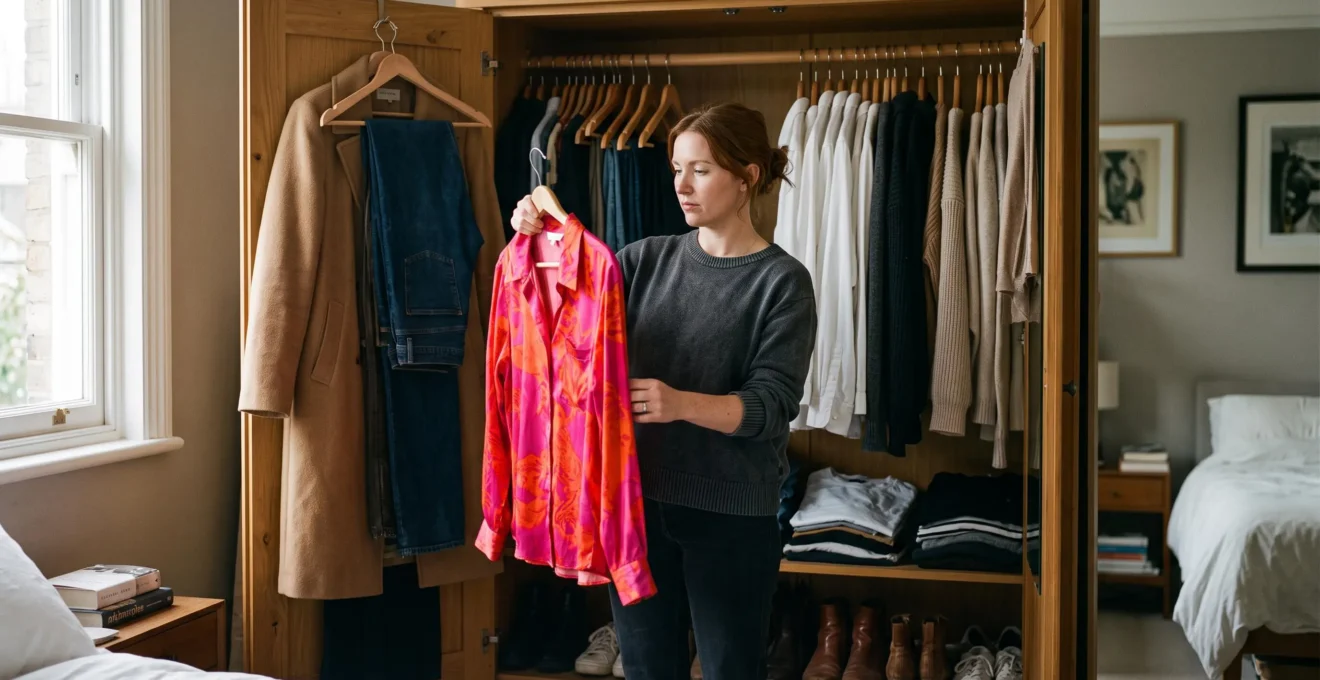
A jacket that seemed irresistible on your feed in March can feel strangely outdated by June. Meanwhile, a pair of well-cut jeans or a simple leather jacket may remain relevant for years. The difference is not necessarily price, quality or how fashionable an item looked when you bought it.
Some trends depend on a temporary cultural moment: a viral styling formula, a recognisable accessory or an aesthetic repeated across thousands of posts. Others connect to established shapes, materials and ways of dressing that can be reinterpreted beyond the season that popularised them.
There is no reliable universal three-month expiry date for fashion trends. What matters is whether an item can survive without the context that made it desirable. Its fit, versatility, personal relevance and potential for repeated wear are often more useful buying criteria than its current visibility.
For anyone tired of buying clothes that quickly feel overexposed, the practical solution is not to abandon trends. It is to become more selective about which ones deserve wardrobe space.
How to avoid short-lived fashion trends
- Judge a trend by how well it fits your existing wardrobe, not by how frequently it appears on social media.
- Test trend pieces through realistic outfits, everyday effort and expected cost per wear before spending.
- Give non-essential purchases a cooling-off period and prioritise garments you would still enjoy without the surrounding hype.
- Why Do Micro-Trends Burn Out So Fast on Social Media?
- How to Test a Trend in 5 Minutes Before You Spend £100 on It?
- Clothes vs Accessories: Where Should You Try a Trend If You Don’t Want Regret?
- The Trend-Uniform Trap That Makes You Look Dated Overnight
- When Is the Best Time to Buy Into a Trend So You Don’t Wear It After It’s Over?
- The Sale Trap That Quietly Doubles Your Wardrobe Clutter
- How to Use a 48-Hour Rule to Stop Impulse Buys Without Missing Good Pieces?
- How Do You Stop Buying Clothes That Seem Right Online but Fail at Home?
Why Do Micro-Trends Burn Out So Fast on Social Media?
Fashion micro-trends often lose their appeal quickly because social media can concentrate attention on the same visual idea within a short period. Repeated exposure makes an item feel desirable, but widespread imitation can also make it feel overly familiar. Trends tied to a particular online aesthetic are especially vulnerable when attention moves elsewhere.
The important distinction is between visibility and lasting demand. Seeing identical shoes, jackets or styling combinations across your feed does not establish that people will continue wearing them. It establishes that the look is highly visible within your particular content environment.
Recommendation algorithms can repeatedly surface related content, creating the impression that a trend is everywhere. Yet an individual’s feed is not a representative measurement of the entire fashion market, and there is no dependable way to identify a trend’s precise peak from a few saved posts.
Research into sponsored fashion-haul content helps explain the purchasing pressure. A 2026 study published in the International Journal of Advertising found that inspiration was a major driver of viewers’ purchase intentions, particularly impulse-driven intentions. Informational content mattered more when viewers had stronger product needs, according to Macquarie University’s research record on sponsored fashion hauls.
The research concerns purchasing intentions rather than verified purchases or the lifespan of individual trends. Nevertheless, it illustrates why an inspirational video and a practical wardrobe decision should be treated separately.
Different types of fashion trends also carry different risks:
- Material and silhouette trends: leather finishes, denim cuts and familiar tailoring proportions can be reinterpreted across seasons, although recurrence is never guaranteed.
- Visual-identity trends: distinctive logos, recognisable viral items and influencer-specific outfit formulas may depend more heavily on a temporary cultural association.
- Aesthetic trends: a colour palette, texture combination or styling mood can sometimes be explored using clothes already owned.
- Product trends: a particular bag, shoe or garment requires a more specific buying decision and may be difficult to repurpose.
Before purchasing, ask whether the item would remain appealing if the platform that popularised it disappeared tomorrow. Would the cut, fabric and styling possibilities still interest you?
Another useful distinction is photographic impact versus everyday wearability. An exaggerated silhouette might look compelling in a short video but demand inconvenient layering, unsuitable footwear or constant adjustment in daily life. That mismatch is a possibility to investigate, not an established characteristic of every viral garment.
Once visibility is no longer mistaken for versatility, the next decision becomes more manageable: can the trend actually work with the wardrobe you already have?
How to Test a Trend in 5 Minutes Before You Spend £100 on It?
A five-minute trend test checks whether a purchase fits your existing clothes, everyday routine and personal style before money changes hands. Identify three compatible wardrobe pieces, inspect realistic styling examples, consider how long the trend has been circulating and assess the effort required to wear it. These checks cannot predict fashion’s future, but they can expose obvious buying risks.
Start with the three-piece wardrobe test. Imagine a £100 blazer in a fashionable seasonal colour. Can you name three items you already own that genuinely work with it?
A white shirt, straight-leg jeans and a grey knit might offer plausible combinations. But if the blazer only works with trousers, shoes and accessories you have not bought, the real financial commitment extends beyond £100.
Next, search for the item alongside terms such as “outfit”, “everyday styling” or “how to wear”. Look beyond brand campaigns and highly coordinated creator content. Examples from people whose proportions, lifestyle and styling preferences resemble yours may reveal more than a perfectly produced campaign image.
Then investigate the trend’s visibility history. Search older posts and review when you first saved similar looks. If the same item has dominated your feed for months, consider whether you still genuinely want it or have simply become familiar with it.
Finally, estimate the daily effort. Does the purchase require a particular hairstyle, specialist underlayers, unfamiliar shoes or uncomfortable proportions? A stylish item that complicates getting dressed may struggle to earn regular use.
Your five-minute trend-buying checklist
- Find three wardrobe matches. Write down three items you already own that would pair naturally with the purchase.
- Build two realistic outfits. Note two complete combinations suitable for activities you actually do.
- Check independent styling examples. Save one realistic image that demonstrates how the item works outside a promotional shoot.
- Review its trend history. Record the oldest relevant post you find and note whether the look still interests you without its viral context.
- Assess effort and expected wear. Write one practical obstacle and an honest estimate of how often you would use the item.
The three-piece threshold and five-minute timeframe are practical screening tools, not scientifically validated predictors. They work best as prompts that expose incompatibility before you commit.
A strong result does not mean the purchase must happen immediately. It means you have a workable foundation for deciding how much money and wardrobe space the trend deserves.
Clothes vs Accessories: Where Should You Try a Trend If You Don’t Want Regret?
Accessories are often a lower-commitment way to experiment with fashionable colours, textures and finishes because they usually depend less on clothing fit. However, garments are the better starting point for trends defined by cut or proportion. The safest choice depends on the item’s visibility, fit requirements and realistic potential for repeated wear.
A practical way to choose is to compare three dimensions before purchasing: how immediately recognisable the trend looks, how dependent it is on your proportions and how many occasions you could realistically wear it.
Consider this decision grid as an editorial shopping tool rather than a statistically established ranking.
| Decision factor | Accessory | Garment |
|---|---|---|
| Fit dependence | Often lower for scarves, bags and jewellery; shoes remain fit-sensitive | Usually higher because cut and proportion affect the whole silhouette |
| Trend visibility | Can be subtle through colour or texture, or very obvious through an iconic design | Depends on how distinctive the cut, print or styling is |
| Cost per wear potential | May be high if compatible with many outfits | May be high if comfortable, practical and easy to repeat |
| Best use | Testing colours, materials and decorative details | Exploring proportions, tailoring and garment-specific silhouettes |
The translation principle means testing a trend at a commitment level that suits your uncertainty. If rich burgundy becomes fashionable, a scarf or belt may help you discover whether the colour genuinely belongs in your wardrobe before considering an expensive coat.
Wear the smaller item across different outfits for several weeks. If the colour still feels appealing and works with your existing clothes, a larger purchase becomes easier to justify.
There is an important exception. A trend centred on trouser rise, jacket length or shoulder shape cannot meaningfully be tested through a necklace or handbag. In that situation, trying on the actual silhouette, perhaps through second-hand shopping or an existing garment with similar proportions, is more informative.
Accessories can also become dated-looking when they concentrate a trend into one unmistakable object. A highly recognisable bag silhouette or prominent seasonal monogram may carry more immediate trend associations than a restrained coat.
A quieter accessory that captures a trend through colour or material may offer greater flexibility, although no neutral finish guarantees longevity.
The objective is not to minimise every purchase. It is to avoid buying a supposedly safer accessory that never works, while reserving larger commitments for changes in style you genuinely enjoy.
The Trend-Uniform Trap That Makes You Look Dated Overnight
A trend-uniform is a complete outfit copied from a recognisable fashion formula rather than assembled around individual preferences. When every element belongs to the same moment, the entire outfit may become strongly associated with that period. Mixing one contemporary element into an established personal style can make the look less dependent on a single trend cycle.
Imagine a widely repeated outfit combining an oversized matching jacket and trousers, a particular sneaker profile, a bucket hat and a specific bag. Each element might work independently. Together, they create a highly recognisable aesthetic package.
Once public attention moves to another formula, that complete look may feel more strongly connected to its original moment than any individual garment would.
The alternative is the one-element rule: retain your familiar outfit structure and introduce one trend-led feature. For example, pair fashionable wide trousers with a shirt, jacket and footwear you have worn comfortably for years.
This approach offers two advantages. It reduces the number of purchases required to recreate a look, and it gives the new piece a chance to work within combinations that already reflect your tastes.
Personal style matters because clothing longevity is not purely about physical condition. The Ellen MacArthur Foundation’s explanation of clothing durability distinguishes physical durability, which concerns a garment’s ability to withstand use, from emotional durability, which concerns its continued desirability to the wearer.
An item may remain perfectly wearable while losing its emotional appeal. Incorporating fashion into an established personal style is one possible way to make that appeal less dependent on external validation.
However, there is nothing inherently wrong with enjoying a complete aesthetic. Fashion experimentation, subcultures and deliberate period-inspired dressing can make a recognisable uniform meaningful rather than regrettable.
The purchase risk emerges when you buy an entire collection of coordinated pieces simply because the formula is currently popular.
Audit recent purchases by separating items that work independently from those that only function alongside other new purchases. If an item requires an entire trend-specific outfit, its versatility is limited. Second-hand alternatives may make experimentation less expensive, provided the fit, condition and total price remain suitable.
The goal is not to dress anonymously or avoid recognisable aesthetics. It is to make sure your wardrobe continues to reflect your decisions after the original trend narrative has faded.
When Is the Best Time to Buy Into a Trend So You Don’t Wear It After It’s Over?
There is no universally best moment to buy a fashion trend. Early purchases offer more potential time to enjoy an emerging look but carry uncertainty, while mass popularity increases visibility and late discounts may coincide with declining interest. A more reliable strategy is to match spending to the item’s lasting appeal, practical usefulness and the risk you can comfortably accept.
Fashion adoption can be considered through three broad phases. These are useful categories for purchase decisions, not a precise forecasting model.
| Trend phase | Potential advantage | Main purchasing risk |
|---|---|---|
| Early visibility | More time to enjoy the look if it continues to suit you | Uncertain adoption and potentially high initial prices |
| Mass popularity | More styles, retailers and opportunities to try items | Buying through social proof rather than genuine preference |
| Late phase or markdown | Possibility of a lower purchase price | Reduced personal interest or limited practical use after purchase |
Instead of trying to predict a precise trend peak, look for durability signals. Does the item connect to an established clothing category? Has a similar shape appeared across different fashion periods? Can the feature be worn without recreating the complete trend?
Wider adoption across street style and different retail categories can suggest that a look has applications beyond one social-media niche. Historical precedent may also show that a silhouette can be reinterpreted. Neither guarantees that a particular purchase will remain fashionable.
Price should be judged alongside expected wear. In a hypothetical example, a £100 jacket worn 50 times costs £2 per wear, while a £30 top worn twice costs £15 per wear. These figures exclude care, repair and other ownership costs, but they illustrate why the cheapest ticket price is not automatically the best value.
Full-price purchases are easier to justify when you already understand the item’s role in your wardrobe and expect substantial use. A discount can make a more experimental item financially manageable, but only when you still genuinely want it.
Second-hand shopping adds another possibility. The Ellen MacArthur Foundation’s overview of fashion resale and repair identifies resale, rental, repair and remaking as business models that can keep clothing in circulation.
Buying a trend second-hand may reduce the initial cost, depending on the market and condition. It does not guarantee a bargain or future resale value. The more useful question is whether you would still be satisfied if you could not resell the item.
Once timing and cost are viewed together, discounted items deserve particular scrutiny: an attractive markdown can disguise a purchase that would never have made sense at full price.
The Sale Trap That Quietly Doubles Your Wardrobe Clutter
Sale shopping can increase wardrobe clutter when discounts become the main reason for buying clothes. A lower price may make an unnecessary item feel justified even when its fit, versatility or expected use has not improved. The real issue is not the sale itself but whether you would still want the garment without its advertised saving.
A familiar shift occurs when browsing a sale rail. Instead of asking, “Will this work with what I own?”, the question becomes, “How much am I saving?”
That change matters because the original ticket price becomes a psychological reference point, even though it says little about how useful the item will be in your wardrobe.
Consider a hypothetical purchase: a jacket originally displayed at £120 is reduced to £45. If you wear it twice, its purchase cost is £22.50 per wear. A £90 jacket worn 45 times costs £2 per wear. The discount is real, but it is not sufficient evidence of value.
End-of-season sales can also include heavily trend-specific stock. Such items may be discounted for several reasons, including seasonality, inventory management or weak demand. The markdown alone cannot prove that a trend has expired, but it does make the item’s long-term relevance worth examining.
Apply the full-price desirability test: would you want this garment if there were no sale label?
This is not a requirement to be willing or able to pay full price. It is a way to distinguish wanting the garment from enjoying the feeling of getting a deal. A well-planned purchase at a discount remains sensible even when the original price exceeds your budget.
Clutter becomes easier to evaluate when it is measurable. Review items purchased on sale that have never been worn, then compare them with unworn full-price purchases.
For each unworn item, record the actual amount paid. Adding those amounts gives you the money spent on clothing that has not yet delivered any wear. Separate recently purchased seasonal items from older, forgotten purchases to avoid treating every unworn garment as an automatic mistake.
The claim that sales literally double wardrobe clutter is not an established general statistic. The headline describes a potential accumulation trap, not a measured universal effect.
A good sale purchase should pass the same fit, styling and usefulness tests as any full-price item. The reduced price should improve the decision, not create the reason for it.
How to Use a 48-Hour Rule to Stop Impulse Buys Without Missing Good Pieces?
The 48-hour rule creates a deliberate pause between discovering a desirable item and buying it. Save the product, leave the shopping environment and reassess it two days later. During that interval, check wardrobe compatibility and whether the desire survives without promotional pressure. The rule is a practical buying discipline rather than a scientifically established guarantee against regret.
Fashion shopping feeds can compress decisions through persuasive imagery, limited-time offers and stock messages. Some scarcity is genuine, particularly with small production runs or one-off collaborations. Other urgency may reflect ordinary marketing rather than a meaningful deadline for your wardrobe.
The purpose of a cooling-off period is to restore time for independent judgment.
MoneyHelper, a UK financial guidance service, recommends recognising spending triggers and waiting before non-essential purchases. Its guidance specifically describes a 24-hour waiting period, alongside saving links and returning later to reassess the purchase. The 48-hour version used here is a more conservative personal shopping rule, not a duration proven superior by the source.
Put the process into practice:
- Save the product link or screenshot without completing checkout.
- Set a reminder for 48 hours later.
- During the pause, identify compatible items you already own and realistic occasions for wear.
- When the reminder arrives, revisit the product directly rather than through the original influencer video or promotional post.
- Buy only if the item still appeals, meets your practical criteria and fits your spending limits.
The second look is particularly important. A piece that felt indispensable during a fast-moving video might seem ordinary when viewed alone on a retailer’s product page.
What if the item genuinely sells out? For a rare second-hand find, limited collaboration or one-off piece, a faster decision may be reasonable if you already know your measurements, budget and styling options. Scarcity should not override those checks; it simply changes how quickly they need to be completed.
For standard retail products, compare alternatives rather than assuming the original item is the only acceptable version. Availability varies, so neither restocking nor sell-outs should be treated as guaranteed.
Finally, notice repeated patterns. If similar jackets repeatedly survive the cooling-off period, perhaps you are identifying a genuine gap in your wardrobe. Instead of purchasing several mediocre versions, compare the options and consider one more deliberate purchase.
A pause only solves the urgency problem. The final challenge is checking whether the product itself will look and feel as good in ordinary life as it does on the screen.
What to remember before your next fashion purchase
- A product’s appearance in promotional content is not reliable proof of its real-world fit, fabric behaviour or colour.
- Existing clothes provide useful reference points for comparing measurements, materials and styling possibilities.
- The strongest buying decision remains convincing when the garment is viewed on its own, without the original styling or promotional context.
How Do You Stop Buying Clothes That Seem Right Online but Fail at Home?
To reduce disappointing online fashion purchases, assess the actual garment rather than relying on styled promotional photography. Compare measurements with clothes you already own, inspect customer images where available, examine fabric composition and evaluate colour cautiously. Then ask whether the item still appeals when imagined without the styling that made it attractive online.
Online fashion photography is designed to present garments effectively. Professional lighting, carefully selected poses, styling and image processing can make the product easier to admire while leaving practical questions unanswered.
Garments may also be pinned, clipped or adjusted during photography to improve how they appear on a model. That does not mean every retailer uses those techniques, but it explains why a photograph may not fully communicate natural drape and fit.
The most useful precaution is to compare actual garment measurements, where the retailer provides them, with a similar item you already own and wear regularly.
Lay your existing garment flat and measure relevant dimensions such as the chest width, waist, length or inseam, depending on the type of clothing. Check how the retailer defines its measurements before comparing, since measurement conventions may differ.
A size label alone is less informative because brands, cuts and garment categories can fit differently. The same labelled size may produce very different proportions.
Look for customer photographs or images showing the product on different bodies and in less controlled settings. These may reveal practical characteristics that are less visible in campaign photography, although customer images can also be affected by lighting, camera angles and individual fit.
Fabric composition deserves equal attention. A structured cotton garment may behave differently from a soft viscose blend, while fabrics with different weights, constructions and elasticity can produce distinct silhouettes even when their product photographs appear similar.
Composition labels do not tell the whole story: weave, finishing, thickness and construction also influence drape, comfort and care requirements. But they provide information that a flattering photograph cannot.
Colour accuracy is another common uncertainty. Screen settings, lighting and editing can shift how a shade appears. Compare the retailer’s written colour description with the photographs and consider how similar materials look in clothes you already own. Do not assume that the precise colour displayed on your screen is a guaranteed specification.
The final filter connects online shopping directly to trend longevity. Imagine the item photographed alone, against a plain background, without a fashionable model, dramatic accessories or carefully recreated social-media aesthetic.
Would you still like its shape, colour, texture and overall design? Can you picture wearing it for your normal activities rather than for the image that originally inspired the purchase?
Passing this test does not guarantee that a garment will become a classic. Personal preferences change, clothes wear out and even familiar silhouettes evolve. But choosing an item for its independent appeal gives it a better chance of remaining relevant to you after the surrounding trend disappears.
Before ordering, also review the retailer’s applicable return conditions and total costs. A return option may reduce the financial consequences of a poor fit, but it is not a substitute for checking the product carefully.
For your next potential purchase, save the item, compare it with an existing garment and build two outfits using clothes you own. If the piece remains appealing after those checks and a deliberate pause, you have a stronger reason to buy it than the number of times it appeared in your feed.
Can a fashion micro-trend become a classic?
Yes, a trend-led item can remain desirable beyond its original moment, particularly when its cut, material and versatility suit repeated use. However, widespread popularity or historical precedent does not guarantee classic status. A garment becomes a lasting wardrobe choice primarily when it continues to work for its wearer, both practically and aesthetically.
Are neutral colours always more timeless than bright colours?
No. Neutral colours may be easier to combine in some wardrobes, but their usefulness depends on the clothes and preferences of the individual. Someone who regularly wears cobalt blue or red may get more use from a bright garment than from a beige item purchased solely because it is described as timeless. Compatibility matters more than a universal colour rule.
How many times should you expect to wear an item before buying it?
There is no universal minimum wear count. Estimate frequency based on climate, occasion, comfort, care requirements and your existing clothing. Dividing purchase price by realistic expected wears can help compare alternatives, but occasional garments and personally meaningful pieces may still offer value beyond a simple cost-per-wear calculation.
Does buying second-hand automatically make a fashion trend a smarter purchase?
Not automatically. Second-hand shopping can provide access to lower-priced or otherwise unavailable items, but fit, condition, shipping costs and expected use still matter. A cheap garment that remains unworn is not necessarily better value than a carefully selected new piece that receives regular use.
How can you follow fashion trends without constantly buying new clothes?
Start by experimenting with what you own. Try different proportions, combine familiar garments in new ways or recreate a colour palette using existing pieces. Borrowing, swapping and occasional second-hand purchases can provide additional options. Following fashion can mean exploring styling ideas rather than purchasing every product associated with them.