
Fashion can feel overwhelming: endless trends, shifting silhouettes, and the pressure to keep up. Yet at its core, dressing well is not about owning more clothes — it is about understanding what works for you. This page gathers everything a beginner or intermediate reader needs to navigate women’s fashion with confidence, from building a functional wardrobe to understanding fabrics, fit, and how to borrow from trends without losing your own identity.
Women’s fashion covers clothing, footwear, accessories, and the way all these elements combine into a coherent personal style. Unlike men’s fashion, which has long been more standardized, women’s fashion offers a wider range of silhouettes, cuts, and categories — which is both an opportunity and a challenge. More choice means more room for self-expression, but also more room for costly mistakes.
Currently, the industry is shaped by three broad movements: a return to timeless basics, a growing interest in sustainable and secondhand clothing, and the rise of comfort-driven dressing that blurs the line between formal and casual. None of these requires a big budget; they mostly require intention.
Before buying anything, it helps to know what you are actually trying to express. Personal style is simply a repeatable pattern in what you like to wear. Think of it as a signature: recognizable, consistent, but flexible enough to evolve.
This sentence becomes your filter. When a piece does not fit it, you skip it, no matter how attractive the discount is.
A functional wardrobe is not built around individual items but around outfits. A beautiful blazer is only valuable if it pairs with at least three things you already own. Many stylists use the concept of a capsule wardrobe: a limited set of interchangeable pieces that cover most of your life situations.
Consider a hypothetical example: Sarah owns a navy blazer, a white tee, straight jeans, a black midi dress, and loafers. By recombining these five items, she can dress for a work meeting, a weekend brunch, and a casual evening — three outfits from five pieces. Multiply that logic across your wardrobe and you understand why versatility beats quantity.
Fit matters more than brand or price. An inexpensive garment that fits your proportions will always look better than an expensive one that fights them. When trying something on, check the shoulders, the waistline, and the length — these are the hardest areas to alter, while hemming or taking in a side seam is usually simple and affordable.
A useful rule of thumb: the closer a garment is to your skin, the more its natural-fiber content matters. A polyester lining inside a wool coat is fine; a fully polyester summer dress is usually less comfortable.
Most dress codes fall into a few recognizable levels of formality, and knowing where an event sits on that scale removes most of the stress.
When in doubt, it is easier to dress slightly up and remove a layer than the reverse. Accessories are the easiest lever: a silk scarf, a belt, or a change of shoes can shift the same base outfit across several levels of formality.
Trends are neither enemies nor obligations. The smartest approach is to treat them as seasoning rather than the main dish. Ask yourself three questions before buying a trend piece: Does it match my style sentence? Can I wear it at least three different ways? Will I still like it in a year?
If the answer to two or more is no, admire the trend from a distance — or capture its spirit with a cheaper temporary piece instead of an investment. This is also where secondhand and rental options shine: they let you test a silhouette without long-term commitment.
Caring for clothes properly is the cheapest way to look put-together. Most garments wear out from washing habits, not from wear itself.
When shopping, a short checklist keeps spending aligned with your wardrobe goals:
There is no magic number. A working wardrobe of around 30 to 40 well-chosen pieces, including shoes and outerwear, covers most lifestyles. What matters is that every piece earns its place through regular wear.
Fit and neutral colors first. Neutrals combine with everything, which multiplies your outfit count. Add personality through affordable accessories rather than expensive statement pieces you may tire of quickly.
Layering is the key. Keep your base pieces year-round and change the outer layer, footwear, and fabric weight. A summer dress becomes a fall outfit with a knit over it and boots underneath.
Dressing well is a skill built through observation and small, deliberate choices — not through constant shopping. Start with what you own, refine gradually, and let your wardrobe tell a story that is genuinely yours.
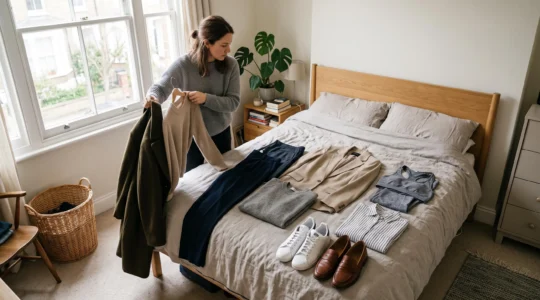
A capsule wardrobe becomes complicated when your Monday office outfit, Wednesday workout and Saturday dinner require different clothes. A single collection of interchangeable basics might look efficient on paper, yet leave you changing outfits several times or buying something new…
Read more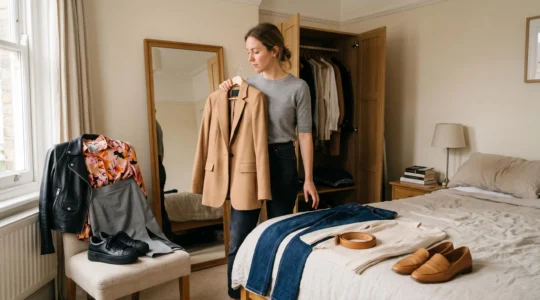
A white T-shirt, well-fitting trousers, and simple shoes can look remarkably polished on one person yet strangely disconnected on another. The difference is rarely the price of the clothes or the number of accessories. More often, it comes down to…
Read more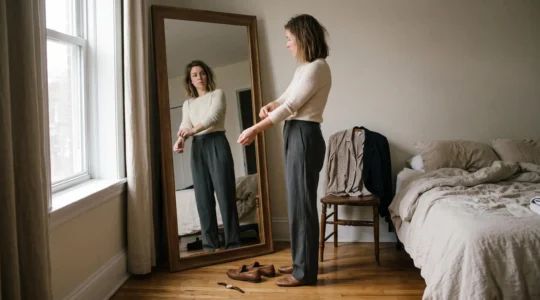
A memorable outfit does not require a designer label, a dramatic colour combination or a wardrobe full of statement pieces. It requires a few deliberate decisions that work together. When time is limited, the most useful priorities are proportion, fabric…
Read more
The difference between an outfit that looks right and one that feels slightly off often comes down to silhouette rather than colour, price or individual pieces. A trouser leg may be too wide for a particular jacket, a hem may…
Read more