
Fashion and beauty can feel overwhelming when you are just getting started. Trends move fast, products promise miracles, and social media seems to change the rules every week. The truth is simpler: looking and feeling your best does not require a big budget or expert-level knowledge. It requires understanding a few core principles and applying them consistently. This pillar page brings together the fundamentals of style, skincare, and beauty in one place, so you can build habits that actually work for your life.
Clothing and grooming are a form of communication. Before you say a word, your outfit, posture, and overall presentation already tell people something about you. That is not about vanity — it is about self-expression and confidence. When your appearance aligns with who you are and how you want to be perceived, you simply feel more at ease.
Consider Maya, a fictional young professional preparing for her first big presentation. She owns the same blazer as her colleague, but she has never thought about how it fits or what to pair it with. Her colleague, who spent a little time understanding cut, color, and proportions, looks polished without spending more. The difference is not money; it is knowledge applied with intention.
Fashion and beauty also have a practical dimension. A well-chosen skincare routine protects your skin long-term. A versatile wardrobe saves you time every morning. These small, repeated decisions compound over the years.
Many people have closets full of clothes and still feel they have nothing to wear. The problem is rarely quantity — it is coherence. A functional wardrobe is built around pieces that work together and suit your actual lifestyle.
A solid foundation makes everything else easier. Most style experts recommend starting with versatile, neutral pieces that mix and match effortlessly:
From this base, you can add personality with color, prints, and accessories. The basics handle the heavy lifting; the fun pieces express who you are.
A 30shirtthatfitswellwillalwayslookbetterthana30 shirt that fits well will always look better than a30shirtthatfitswellwillalwayslookbetterthana300 shirt that does not. Learning to assess fit — shoulder seams sitting at the shoulder, hemlines hitting the right point, waistbands that are neither tight nor loose — is one of the highest-return skills in fashion. When something is almost right, a tailor can often adjust it for a modest fee, transforming an average garment into a favorite.
You do not need a professional color analysis to benefit from the concept. Simply notice which colors earn you compliments and which make you look tired. Similarly, understanding proportions — balancing a loose top with more fitted bottoms, for example — creates outfits that look intentional rather than accidental.
Makeup sits better on healthy skin, and healthy skin comes from consistency, not complexity. The beauty industry thrives on convincing you that you need ten steps and dozens of products. In reality, a simple, consistent routine outperforms an elaborate one you abandon after two weeks.
If you do nothing else, do these three things:
Dermatologists repeatedly emphasize that sunscreen is the one product with the strongest evidence behind its long-term benefits. Everything else is refinement.
Before buying anything, identify what you are working with:
Introduce one new product at a time and give it several weeks before judging results. Skin cell turnover takes time, and impatience leads to wasted money and irritation.
Modern beauty culture has moved toward a more natural aesthetic, and that is good news for beginners. Makeup works best when it enhances what is already there rather than covering it up.
Five products are enough for a polished everyday look. Techniques matter more than quantity: blend well, choose shades close to your natural coloring, and apply in good light. As your confidence grows, you can experiment with contour, eyeshadow, and bolder statements.
Hair routines generate endless debate, but the fundamentals are stable. Wash at a frequency that suits your scalp — some people need daily washing, others twice a week. Use conditioner on mid-lengths and ends, protect hair from excessive heat styling, and get regular trims to prevent split ends from traveling up the strand.
If you have textured or curly hair, moisture is the priority: hydration, gentle detangling, and styles that work with your natural pattern rather than against it. The biggest shift most people can make is accepting their natural hair type instead of fighting it daily.
Fashion and beauty purchases add up quickly. A few habits protect both your wallet and the planet:
Think of your closet and bathroom shelf as investments rather than impulse purchases. A smaller collection of items you genuinely love will serve you better than drawers full of almost-right options.
Misinformation is everywhere in this space. Here are a few myths worth retiring:
Ultimately, fashion and beauty are tools, not standards to live up to. The most stylish people are rarely those with the most expensive items — they are the ones who dress with intention and comfort in their own choices. Confidence is built through small, repeated decisions: an outfit that fits well, skin you feel good about, a routine that fits your real schedule.
Start small. Choose one area — perhaps simplifying your skincare or organizing your closet — and build from there. Consistency over months will do more for your appearance and self-assurance than any single purchase ever could. This blog is here to guide you through each of those steps, one practical, honest conversation at a time.

That dress looked effortless on the website. The trousers appeared beautifully tailored. The jumper seemed like the missing piece in your wardrobe. Then the parcel arrived, and something felt wrong. The colour was different, the fabric behaved unexpectedly, or the…
Read more
Shopping more thoughtfully doesn’t mean giving up fashion, buying only neutral basics or refusing yourself anything new. It means choosing clothes that genuinely improve your everyday wardrobe instead of repeatedly buying pieces that feel exciting for a moment but rarely…
Read more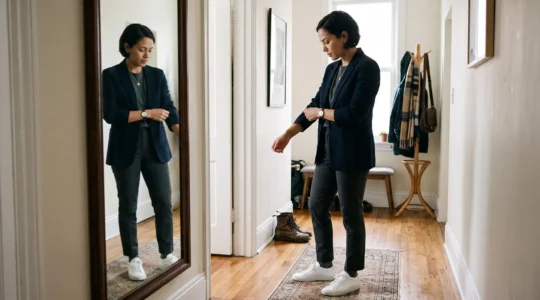
A tailored blazer, comfortable jeans and leather shoes can all be excellent wardrobe choices. Yet put them together without considering their relationship, and the result may look as though you dressed for three different occasions. The difference between a successful…
Read more
A shirt can look beautifully crisp under store spotlights and turn limp after three washes. A coat can feel substantial on the hanger but lose its shape by midwinter. And a premium price tag can distract from the loose stitching…
Read more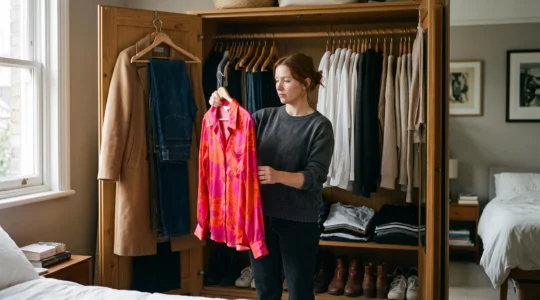
A jacket that seemed irresistible on your feed in March can feel strangely outdated by June. Meanwhile, a pair of well-cut jeans or a simple leather jacket may remain relevant for years. The difference is not necessarily price, quality or…
Read more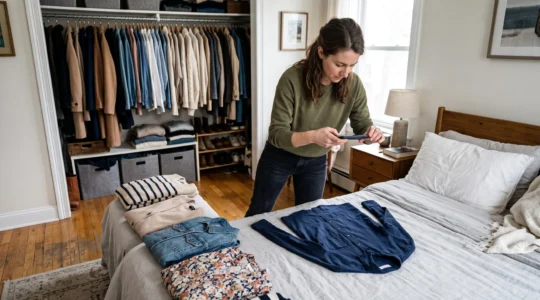
Creating 20 new outfit combinations without buying anything starts with changing how you see your wardrobe. Instead of treating familiar outfits as fixed sets, separate your clothes into interchangeable pieces, photograph them, and test new pairings using a few consistent…
Read more