Men’s Grooming

Men’s grooming has moved far beyond a quick shave and a splash of aftershave. Today, it covers everything from basic skincare and beard maintenance to hair styling, nail care and fragrance. Yet many men still feel unsure where to start, overwhelmed by product choices or convinced that an elaborate routine is required. The truth is simpler: effective grooming rests on a handful of consistent habits, the right techniques and a small set of products that genuinely suit your skin and hair.

This page brings together the core pillars of men’s grooming, explains how they connect, and answers the questions beginners ask most often. Whether you are building your first routine or refining an existing one, the aim is to give you a clear, practical foundation.

What Men’s Grooming Actually Means

At its core, grooming is preventive and maintenance care. Think of it the way you think about car maintenance: regular, small interventions keep everything running well, while neglect leads to bigger problems that are harder to fix. Grooming is not about vanity or chasing trends; it is about hygiene, skin health, and presenting yourself with confidence.

The main pillars include:

  • Skincare: cleansing, hydrating and protecting the skin on your face and body.
  • Shaving and beard care: removing or maintaining facial hair with minimal irritation.
  • Hair care and styling: keeping scalp and hair healthy, then shaping it with products.
  • Body and nail care: hygiene, deodorant, hand and foot maintenance.
  • Fragrance: using scent deliberately rather than by accident.

Each pillar supports the others. Well-hydrated skin makes shaving easier; a healthy scalp makes styling easier; clean nails and fresh breath affect how every other effort is perceived.

Building a Simple Skincare Routine

Skincare is where most men see the fastest, most visible results, and it requires far fewer steps than marketing suggests. A functional routine can be reduced to three actions performed consistently.

The Three Non-Negotiables

  1. Cleanse twice a day. Use a gentle facial cleanser, not a bar of hand soap, which strips the skin’s natural oils and triggers rebound oiliness. Wash in the morning and after exercise or at bedtime.
  2. Moisturize daily. Apply a lightweight moisturizer after cleansing while the skin is still slightly damp. Even oily skin benefits, because dehydrated skin often overproduces oil to compensate.
  3. Protect with SPF every morning. Sun exposure is the leading cause of premature aging, dark spots and skin damage. A broad-spectrum sunscreen of SPF 30 or higher, applied every morning even on cloudy days, is the single most effective anti-aging step available.

Useful Additions Once the Basics Are Habit

  • Exfoliation, once or twice a week, removes dead skin cells that dull the complexion and clog pores. A chemical exfoliant such as salicylic acid suits oily or acne-prone skin better than harsh scrubs.
  • Eye cream can help with puffiness and dark circles, though results are gradual and lifestyle factors like sleep matter just as much.
  • Targeted treatments such as a benzoyl peroxide spot treatment for breakouts or a retinol product at night for texture and fine lines, introduced slowly.

A common mistake is buying ten products at once. Start with cleanser, moisturizer and sunscreen, use them consistently for a month, then add one item at a time so you can tell what is actually working.

Shaving Without Irritation

Razor burn, ingrown hairs and redness are the most frequent grooming complaints among men, and almost all of them come from technique rather than equipment.

A Better Shaving Process

  1. Shave after a warm shower or press a warm, damp towel to your face for a minute. Heat softens the hair and relaxes the skin.
  2. Use a proper shaving product. A shaving cream or gel creates a protective cushion; dry shaving with just water invites irritation.
  3. Shave with the grain first. Going against the grain on the first pass cuts hair below skin level, which is a leading cause of ingrown hairs.
  4. Rinse the blade frequently and use light pressure. Pressing harder does not give a closer shave; it just scrapes the skin.
  5. Rinse with cool water to close the pores, pat dry, and apply an alcohol-free aftershave balm to rehydrate.

Blade choice matters more than price. A sharp blade replaced regularly beats an expensive cartridge worn dull. As a rule of thumb, replace blades after five to ten shaves, or sooner if you notice tugging.

Beard Care and Maintenance

If you keep facial hair, beard care is a category of its own. A beard is hair and the skin beneath it, and both need attention.

  • Wash the beard two to three times a week with a dedicated beard wash. Regular shampoo strips beard hair of its natural oils and leaves it coarse.
  • Apply beard oil daily to the skin beneath the beard, not just the hair. This moisturizes the underlying skin, reducing itchiness and flaking, often called beardruff.
  • Use a beard balm or softener if your beard is longer, to tame flyaways and add light hold.
  • Trim regularly, even when growing a beard. Defining the neckline and cheek lines keeps a beard looking intentional rather than unkempt. The neckline typically sits about two finger-widths above the Adam’s apple.

Beard length and style should work with your face shape. A longer beard visually elongates a round face, while fuller cheeks benefit from tighter trimming at the sides with more length at the chin.

Hair Care and Styling Fundamentals

Good hair starts at the scalp. Product buildup, oil and dead skin on the scalp affect hair quality the way soil quality affects a garden.

  • Wash according to your hair type. Oily hair may need daily washing; dry or coarse hair often looks and feels better washed every two or three days.
  • Condition every time you shampoo. Conditioner smooths the hair cuticle and is not just for long hair.
  • Get regular haircuts every four to six weeks for shorter styles. Shape maintenance is what separates a sharp haircut from a grown-out one.

For styling, the guiding principle is to match the product to the finish you want:

  • Matte clay or paste for texture and volume with no shine, suited to thicker hair.
  • Pomade for defined, structured styles; water-based versions wash out easily.
  • Cream for light control and a natural look on fine or medium hair.

Apply styling products to towel-dried hair, start with a pea-sized amount, and add more only if needed. Excess product is the most common styling mistake.

Body, Hands and Details

Small details disproportionately affect how polished you appear. Hands and nails are often the first thing people notice in a handshake.

  • Moisturize hands regularly, especially in cold weather, and keep nails trimmed and clean.
  • Use deodorant or antiperspirant on dry skin after showering; antiperspirants work best when applied at night.
  • Take care of your feet with basic hygiene and a foot file for calluses if needed.
  • Manage nose, ear and eyebrow hair with a small trimmer; these details frame the face more than most men realize.

Using Fragrance Well

Fragrance is the finishing touch, and restraint is the skill. One or two sprays on pulse points, such as the chest or neck, is enough for an eau de toilette. Scent should be discovered when someone is near you, not announced across a room. Match intensity to the setting: lighter, fresher scents for daytime and the office, warmer or deeper profiles for evenings. Store bottles away from heat and direct sunlight, which degrade the fragrance over time.

Common Grooming Mistakes to Avoid

  • Using hot water on the face, which strips oils and worsens dryness and redness. Lukewarm water is the right temperature.
  • Skipping sunscreen, the most avoidable cause of skin damage.
  • Chasing every trend product instead of mastering consistent basics.
  • Ignoring the neck and ears when applying skincare and sunscreen.
  • Over-washing hair and skin, which disrupts natural balance and often makes the original problem worse.

Frequently Asked Questions

How long until I see results from a skincare routine?

Hydration effects are immediate, but meaningful changes in texture, breakouts or tone generally take four to eight weeks of consistent use. Skin renewal is a slow process, and abandoning a routine after two weeks is the most common reason it seems not to work.

Do I need different products if I have sensitive skin?

Possibly, but not necessarily more products. Look for fragrance-free formulas, avoid strong exfoliants initially, and patch-test anything new on your inner forearm for a day before applying it to your face.

Is an expensive razor or shampoo worth it?

Rarely. Technique, freshness of the blade and consistency of use matter far more than price. Many well-regarded products are affordable; what counts is that the formula suits your skin and hair type.

What is the minimum routine if I am short on time?

Cleanse, moisturize and apply sunscreen in the morning; cleanse and moisturize at night. That two-minute structure covers the vast majority of what effective grooming requires.

The Bottom Line

Men’s grooming is not a complex discipline reserved for enthusiasts. It is a set of simple, repeatable habits: care for your skin, maintain your hair and beard deliberately, attend to small details, and be consistent. Start with the basics, add refinements only where you notice a genuine need, and let routine rather than product count do the heavy lifting. Done well, grooming pays dividends in how you look, how you feel and how confidently you move through the day.
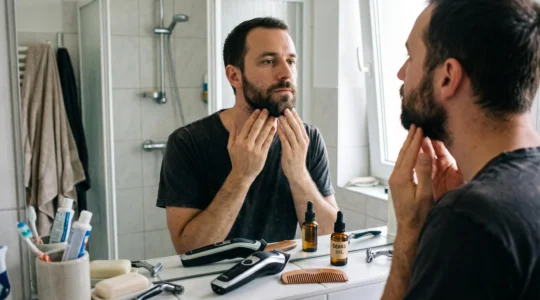
A man checks the evenness of his beard at a home bathroom mirror with a trimmer, comb and beard oil on the counter.

How Do You Keep Facial Hair Sharp Without Going to the Barber Every Week ?

Keeping facial hair sharp without visiting a barber every week is primarily a matter of controlling length, maintaining clean edges and looking after the skin underneath. A short beard or deliberate stubble does not need constant professional reshaping, but it…

Read more
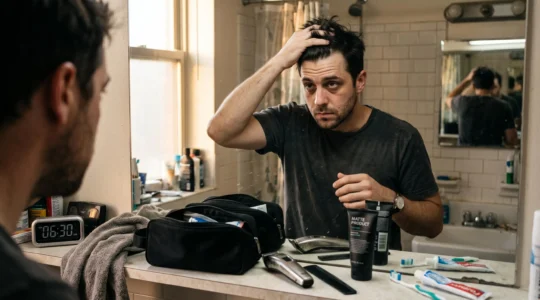
A sleep-deprived man styling his hair with his fingers at a bathroom mirror while a comb, trimmer and wash bag wait on the counter in early morning light.

How Do You Build a Personal Grooming Routine That Still Works on 5 Hours of Sleep ?

Five hours of sleep can leave you short on energy, patience, and time for personal care. The solution is not to add more products or force yourself through an elaborate morning routine. It is to build a grooming system that…

Read more