
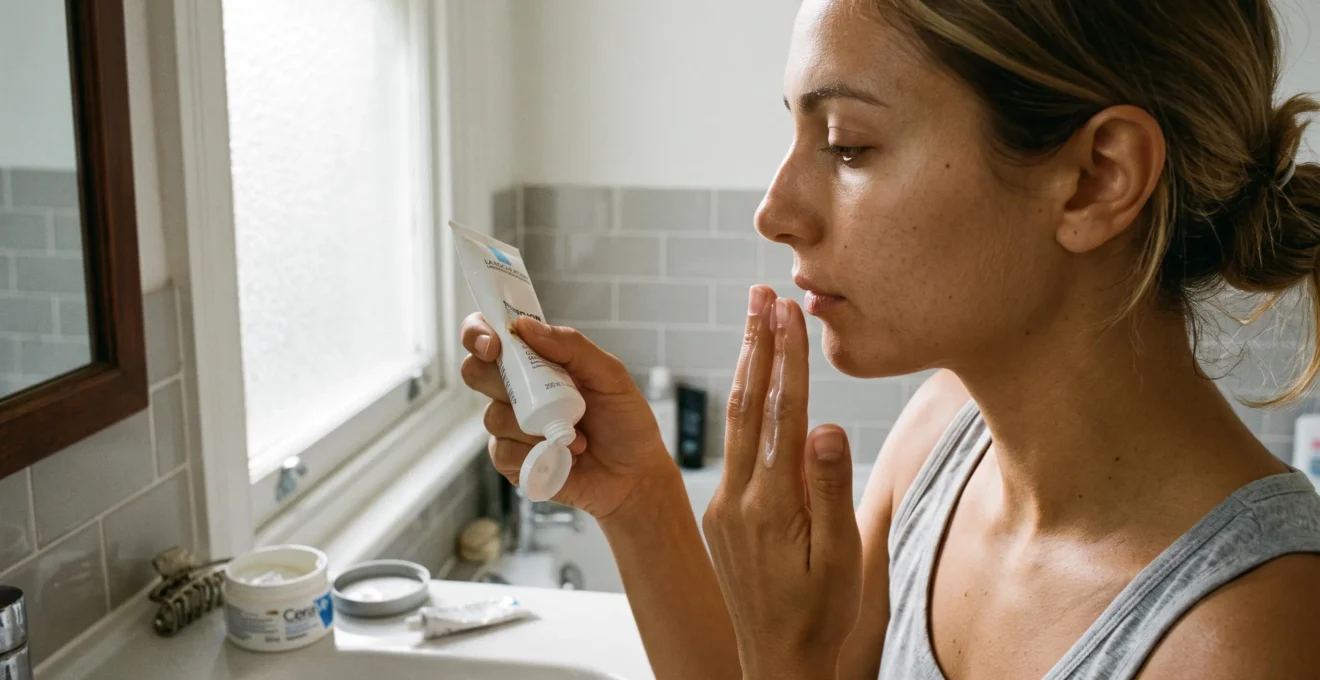
If sunscreen makes your face shiny, causes makeup to separate, or leaves a sticky film, wearing it every morning can feel like another skincare chore. The solution is not to force yourself through an uncomfortable routine. It is to find a formula you enjoy wearing, apply enough of it, and make sun protection fit the way you already live.
Daily sun protection works best when it combines a comfortable broad-spectrum 30 SPF or higher sunscreen with simple habits that reduce unnecessary UV exposure. A lightweight fluid may replace a heavy cream, a hat can reduce your reliance on constant touch-ups, and moving away from direct window sunlight can make an indoor routine easier.
The goal is to prevent avoidable photoageing and uneven pigmentation without sacrificing how your skin feels or how your makeup looks. You do not need a complicated product collection. You need a reliable morning application, a sensible approach to reapplication, and a formula you can comfortably use in the recommended amount.
Daily SPF without the greasy feeling: the essentials
- Choose a broad-spectrum SPF 30 or higher sunscreen with a texture that suits your skin, rather than assuming every high-SPF product feels heavy.
- Apply a generous, even layer across your face and other exposed areas. Thin applications and SPF makeup alone may provide less protection than expected.
- Reapply during outdoor exposure, adjust indoor precautions to direct sunlight, and use shade, clothing, and accessories to make protection easier.
- Why Does Sun Damage Build Up Even If You Don’t Sunbathe?
- How to Apply Enough SPF to Actually Protect Your Face Without Pilling?
- Mineral or Chemical Sunscreen: Which Feels Lighter Under Makeup?
- The SPF Mistake That Gives You a False Sense of Protection Every Day
- When Should You Reapply SPF If You Sit Near a Window Most of the Day?
- How to Choose a Broad-Spectrum Sunscreen in 3 Questions If You Hate Greasy SPF?
- How to Cut UV Exposure in Half With 4 Changes That Don’t Feel Extreme?
- How Do You Tell If Your Skin Changes Are UV Damage or Just ‘Ageing’?
Why Does Sun Damage Build Up Even If You Don’t Sunbathe?
Sun damage accumulates because everyday ultraviolet exposure does not require sunbathing or visible sunburn. UVA radiation reaches your skin during ordinary outdoor activities, passes through clouds, and can penetrate ordinary window glass. Over time, repeated exposure contributes to collagen damage, uneven pigmentation, and premature ageing, even when you rarely spend an afternoon in direct sunlight.
The important distinction is between UVA and UVB radiation. UVB is strongly associated with sunburn, while UVA contributes substantially to photoageing and pigmentation changes. Both can damage skin, but the absence of redness does not mean the absence of UV exposure.
The American Academy of Dermatology sunscreen FAQs explain that UVA can pass through window glass and contribute to wrinkles and age spots. This matters if your typical day involves driving, walking to work, waiting outside, or sitting beside a bright window.
Ordinary glass blocks most UVB but can transmit a meaningful amount of UVA. Actual exposure varies according to the glass, its coatings, the direction of sunlight, and how close you sit to the window. A desk several metres from direct sunlight is not equivalent to a driver’s seat receiving sunlight through a side window.
Cumulative exposure matters more than whether you consider yourself an outdoor person. Repeated doses can contribute to changes in collagen, skin texture, and pigmentation long before the effects become obvious.
What a randomized trial found about daily sunscreen
An Australian randomized trial followed 903 adults younger than 55 years and compared regular broad-spectrum sunscreen use with discretionary application over approximately 4.5 years.
The daily-use group showed no detectable increase in skin ageing on the study’s assessment measure and had lower measured skin ageing than the discretionary-use group. The findings support regular sunscreen use for slowing photoageing, although they do not establish identical effects across every age group or skin type.
The original findings are available in the randomized trial on sunscreen and skin ageing.
Sun protection is therefore not exclusively a beach-day concern. It is particularly relevant when regular exposure is predictable, even if each individual exposure feels insignificant.
Once you recognize the exposure already built into your day, the next challenge is applying enough sunscreen without creating the heavy, uneven finish that makes you want to skip it.
How to Apply Enough SPF to Actually Protect Your Face Without Pilling?
To get reliable protection without pilling, use a generous amount of sunscreen, spread it evenly, and avoid layering too many incompatible products. Apply sunscreen after your usual moisturizer and before makeup, allowing each layer to settle. A lightweight formula and careful application technique usually matter more for comfort than using less product.
The SPF on the label is determined under standardized testing conditions. If you spread a small cosmetic amount across your entire face, you should not assume you are receiving the labelled level of protection.
The AAD instructions for applying sunscreen recommend at least 1 teaspoon for the face, described as approximately the amount extending along the index and middle fingers. The finger method is a convenient visual guide, but the actual volume varies with the nozzle, product consistency, and finger size.
A coin-sized blob is less dependable because coins and product thickness vary. Pay attention to complete coverage rather than assuming that one particular blob always delivers the correct dose. Include the ears, sides of the neck, jawline, hairline, and any exposed scalp. For the delicate eyelid area, use an appropriate product you tolerate, keeping it out of your eyes; sunglasses provide valuable additional protection.
Pilling is not proof that sunscreen is ineffective. It often indicates that layers are rolling into small particles when rubbed, particularly when incompatible textures, excess products, or repeated blending are involved.
Try this practical application sequence:
- Cleanse your face and apply your normal skincare products, keeping unnecessary layers to a minimum.
- Use moisturizer if your skin needs it. If the sunscreen is moisturizing enough, a separate cream may not be necessary.
- Allow the previous layer to settle before distributing sunscreen gently and evenly across exposed skin.
- Give sunscreen time to form an even layer before applying foundation, ideally patting rather than repeatedly rubbing the makeup over it.
- If pilling persists, test fewer products or a different moisturizer-sunscreen combination instead of automatically reducing the SPF amount.
There is no universally validated anti-pilling waiting interval. A short pause can be practical, but your products and skin determine whether it helps. For planned outdoor exposure, follow your sunscreen’s directions and allow the recommended application time.
Moisturizers and foundations containing SPF can contribute to protection, but they become unreliable substitutes if you use only the tiny amount normally needed for cosmetic coverage. Ask yourself whether you would willingly apply that makeup product in the quantity required for adequate sunscreen coverage. If not, use a dedicated sunscreen underneath.
Your five-step no-pilling SPF morning check
- Place your chosen sunscreen beside your toothbrush or morning moisturizer. Result: the product is visible at your existing routine trigger.
- Check the label for broad-spectrum protection and SPF 30 or higher. Result: you have confirmed the product’s stated protection.
- Dispense a generous, appropriate amount using the product guidance and finger method as references. Result: you can see the intended application quantity before spreading it.
- Apply evenly, checking the hairline, ears, jawline, and exposed neck. Result: a mirror check reveals no obvious missed areas.
- Apply your usual makeup and inspect the finish in daylight. Result: you can identify whether the combination pills, shines excessively, or remains comfortable.
If your technique is sound but the formula still feels unpleasant, changing the type or texture of sunscreen may solve more problems than changing your entire skincare routine.
Mineral or Chemical Sunscreen: Which Feels Lighter Under Makeup?
Modern chemical sunscreens often come in lightweight, transparent fluids that feel comfortable under foundation, while mineral sunscreens can be appealing for reactive or sensitive skin. However, neither category guarantees a particular texture. The finished formulation determines greasiness, white cast, pilling, eye comfort, and makeup compatibility more reliably than the filter category alone.
Mineral sunscreens use zinc oxide, titanium dioxide, or both as active UV filters. Chemical sunscreens use organic UV-filter ingredients, while hybrid products combine the two categories. Properly formulated products from all three groups can provide effective broad-spectrum protection.
For many makeup wearers, an invisible fluid or gel is an appealing starting point because it may leave less visible residue. Mineral formulations can feel thicker or leave a pale cast, although modern tinted products offer alternatives. These are tendencies worth testing, not rules that apply to every product.
To narrow down your choice, compare the two categories according to what actually bothers you.
| What matters | Mineral sunscreen | Chemical sunscreen |
|---|---|---|
| Feel under makeup | Ranges from lightweight tinted fluid to thicker cream; some formulas may require extra blending. | Often available in sheer fluids and gels, although richer or shinier options also exist. |
| Visible finish | Some products leave a white or grey cast, especially on deeper skin tones. | Many formulas dry down transparently, depending on their other ingredients. |
| Sensitive skin | Often a useful option for reactive skin. | Some formulas may sting or irritate, but individual tolerance varies. |
| Foundation compatibility | May work well when the tint and texture complement makeup. | Lightweight products may layer easily, but certain combinations can still pill. |
| Best way to decide | Test the shade, coverage, comfort, and finish. | Test eye comfort, shine, and how makeup sits over it. |
For medium and deep skin tones, white cast deserves particular attention. Tinted mineral sunscreen may be more cosmetically acceptable than a traditional untinted cream, provided its shade works on your complexion. Products containing iron oxides may also provide additional protection against visible light that contributes to some forms of hyperpigmentation.
If your main complaint is eye stinging, try a formula specifically intended for sensitive skin or the eye area instead of assuming every chemical sunscreen will sting. If it is excessive shine, look for lighter or oil-control finishes. If it is tightness, a more hydrating formula may feel better than a strongly mattifying one.
Before buying a full-sized product, test a sample with your normal moisturizer, foundation, and powder. Check how it applies in an adequate amount, not merely how one small drop disappears into the skin. Look again after several hours to assess comfort and finish.
Whatever you choose, the next important distinction is between feeling protected and actually maintaining protection throughout a normal day.
The SPF Mistake That Gives You a False Sense of Protection Every Day
The biggest everyday sunscreen mistake is assuming that one thin application in the morning provides full protection for the entire day. Labelled SPF depends on applying enough product evenly, while protection can be affected by wear, rubbing, sweating, and water exposure. A higher SPF number does not automatically compensate for poor coverage or neglected reapplication.
Think of the SPF number as a tested performance characteristic, not a guarantee that every application will achieve the same result. SPF 30 filters approximately 97 % of UVB radiation under appropriate testing conditions. That level of performance cannot be assumed when someone spreads a tiny amount across their face.
SPF 50 may offer a higher tested level of UVB protection, but using it sparingly does not establish that you are getting the labelled protection. It also does not mean you can ignore ongoing outdoor exposure. Broad-spectrum protection and correct application remain essential.
The false-confidence problem extends beyond the sunscreen itself. Someone who believes their morning application makes them fully protected may stop seeking shade, skip a hat, or remain outdoors longer than they otherwise would. Sunscreen is an important part of protection, not permission to disregard exposure.
Consider a hypothetical weekday: you apply a thin layer before work, wear makeup, touch your face during meetings, and walk outside for lunch. By midafternoon, you still remember using SPF 50 that morning, but you have not checked coverage or reapplied before further exposure. The product’s label alone cannot tell you how much protection remains.
A simple routine audit can identify the most likely gap:
- Quantity: Am I applying a meaningful amount across all exposed areas, or only enough to avoid shine?
- Coverage: Do I consistently miss my ears, hairline, neck, or jawline?
- Wear: Does my routine involve wiping, rubbing, sweating, or washing sunscreen away?
- Exposure: Am I spending substantial time outdoors without refreshing protection or using shade?
Correcting just one weak point can make a routine more dependable. If you under-apply because a cream feels greasy, finding a pleasant formula may be more useful than buying an even higher SPF that you also apply too thinly.
Reapplication matters especially during continued outdoor exposure, but indoor days require a more practical assessment of how much sunlight actually reaches you.
When Should You Reapply SPF If You Sit Near a Window Most of the Day?
If you spend most of the day indoors, sunscreen reapplication should reflect your actual exposure rather than automatically follow a beach-day routine. Reapply every 2 hours during ongoing outdoor exposure, and after swimming or significant sweating. Indoors, direct sunlight through ordinary windows may justify additional protection, while sitting away from direct sunlight generally presents a different exposure situation.
The main consideration is whether direct sunlight regularly reaches your skin. Ordinary glass can allow UVA through, but transmitted exposure depends on the type of glass, UV-filtering treatments, window orientation, and time spent in sunlight.
For example, someone working directly beside a bright, unfiltered window for several hours may reasonably choose to refresh sunscreen around midday or reduce exposure using curtains or a different desk position. By contrast, someone working well away from windows, without meaningful direct daylight exposure, may not need the same reapplication schedule solely because two hours have passed.
There is no universally validated indoor reapplication interval for every window and workspace. This is why location, direct sunlight, and planned outdoor activities are more useful decision points than a rigid schedule applied to every situation.
Makeup introduces another obstacle. Removing a full face of foundation to reapply sunscreen rarely feels practical during a working day, but there are several alternatives to consider.
Different touch-up formats solve different cosmetic problems, although none automatically guarantees adequate coverage:
- SPF sticks: Portable and easy to target, but they require sufficient, overlapping passes for even coverage. A quick swipe is not necessarily a full application.
- SPF powders: Useful for reducing shine and adding a layer over makeup, but achieving the labelled protection can be difficult if applied lightly.
- SPF sprays or setting-spray-style products: Convenient in principle, but adequate quantity and even distribution can be challenging. Follow the label carefully, avoid inhalation, and do not spray directly into the face unless specifically instructed.
- Lightweight sunscreen fluids: A more dependable option when you can gently reapply an appropriate amount without disrupting your makeup.
For someone who wears foundation daily, a well-applied morning layer plus sensible exposure management may be easier to sustain than repeatedly applying an inadequate amount of powder. When significant outdoor exposure is expected, prioritize proper reapplication using a suitable product.
Keep an SPF product in your bag or near the door as a reminder before lunch walks, commuting, or afternoon outdoor activities. A predictable trigger usually requires less effort than constantly monitoring the clock.
The next step is choosing a sunscreen that feels good enough to become your default, rather than a product you tolerate only when necessary.
How to Choose a Broad-Spectrum Sunscreen in 3 Questions If You Hate Greasy SPF?
Choose a comfortable broad-spectrum sunscreen by answering three questions: what does your skin dislike, how will you wear the product, and which texture feels pleasant enough to use generously? Start with SPF 30 or higher, confirm appropriate UVA and UVB protection, and evaluate the finish on your own skin. Comfort is essential for consistent use.
Broad-spectrum protection matters because the SPF number primarily reflects protection against sunburn-related ultraviolet exposure. It does not independently tell you how much UVA protection a product provides.
The AAD explanation of sunscreen labels describes broad-spectrum protection, mineral and chemical UV filters, and the meaning of SPF ratings. In the United States, look for the broad-spectrum designation. In other markets, UVA markings such as the circled UVA symbol or recognized star-rating systems can provide additional information, depending on local labelling rules. These systems should not be assumed to communicate identical ratings.
With the basic protection requirements established, use these three questions to find something you will actually wear.
- What is my main skin complaint? If oiliness is the problem, try a lightweight gel-fluid or oil-control finish. If you experience dryness, consider a moisturizing sunscreen with ingredients that support hydration. For sensitive skin, prioritize personal tolerance and a suitable formulation. If white cast is the issue, explore transparent or appropriately tinted options.
- Where will I wear it? Bare skin may allow more flexibility with finish, while makeup wearers should test sunscreen beneath their usual foundation. For outdoor exercise, sweating, or swimming, water resistance becomes especially important. Reapplication practicality matters as much as the initial appearance.
- Which texture do I genuinely enjoy? Compare fluid, gel, lotion, cream, and stick formats. A weightless or silicone-based finish may feel appealing to some people, but sensory preferences vary. Judge a formula after applying an adequate amount, not after spreading a single drop.
Marketing descriptions such as “matte,” “invisible,” and “non-greasy” are useful starting points, not guarantees. A strongly mattifying product may feel uncomfortable on dry skin, while a hydrating cream may become shiny on an oilier complexion.
The amount you are willing to apply is a useful reality check. If a formula feels good only when used sparingly, it may not be right for your routine.
Price and availability also matter. A sunscreen that is easy to find locally and affordable enough to use generously is often a more practical long-term choice than an expensive product you feel compelled to ration.
Before committing to a new formula, consider testing a sample during a normal day. Check whether you can wear the intended amount comfortably, whether the product stings near your eyes, and whether makeup stays in place.
Even the most comfortable sunscreen works better as part of a wider sun-protection routine that does not depend entirely on applying products.
How to Cut UV Exposure in Half With 4 Changes That Don’t Feel Extreme?
Four manageable changes can reduce everyday UV exposure: choose a consistent SPF habit, avoid unnecessary time in strong sunlight, make shade more convenient, and use protective accessories or window adjustments. These measures can meaningfully reduce cumulative exposure, but there is no evidence here that they will cut every person’s UV dose by exactly 50%.
Think of sun protection as a system rather than a single product. Sunscreen helps protect exposed skin, but shade, clothing, and changes to your environment can reduce how much ultraviolet radiation reaches it in the first place.
The most sustainable changes are those that fit naturally into routines you already have.
- Attach sunscreen to a morning habit. Keep it near your toothbrush, skincare products, or another visible morning cue. Applying it as part of a familiar sequence makes it easier to remember than relying on a new reminder every day.
- Adjust outdoor timing when practical. If you have flexibility, schedule optional walks or errands away from periods of strong sunlight. Use local UV-index information as a guide rather than assuming the same hours or exposure conditions apply everywhere.
- Make shade and accessories convenient. Choose a shaded route or outdoor seat when possible. Keep a broad-brimmed hat and UV-protective sunglasses somewhere accessible. Protective clothing can cover areas where sunscreen application is easy to overlook.
- Reduce direct indoor window exposure. Move a desk out of a direct sunbeam, adjust curtains, or investigate an appropriate UV-filtering window film. The usefulness of these changes depends on the existing glazing and actual sunlight reaching your workspace.
The indoor adjustment is particularly attractive because it can reduce repeated exposure without requiring a new daily skincare step. A one-time change to desk placement or window filtering may be easier to maintain than remembering additional sunscreen applications throughout the workday.
Window films should be selected according to their documented UV-filtering specifications and compatibility with the glass. They are not all equivalent, and a room that already has effective UV-filtering glazing may need no additional treatment.
Likewise, a tinted moisturizer containing SPF can simplify makeup for some people, but it should not replace an adequately applied sunscreen layer unless it is used in a protective amount and provides the necessary coverage.
These four changes do not produce a guaranteed 50% reduction. The reduction depends on initial exposure, local UV conditions, time outdoors, and how consistently the measures are used. Their advantage is that they reduce reliance on sunscreen alone.
Small improvements become meaningful when repeated. A comfortable SPF application every morning, a shaded lunch spot, and a hat kept by the door are less demanding than an elaborate routine that falls apart during a busy week.
With a workable routine in place, changes in skin tone and texture can provide useful context for understanding why prevention matters, although they cannot diagnose their own cause.
Key takeaways before assessing your skin
- Uneven pigmentation and changes in texture can have several causes, so their appearance alone cannot establish that UV exposure is responsible.
- Regular sunscreen use has clinical evidence supporting the prevention of photoageing, but prevention should not be confused with reversing every existing change.
- Consistent photographs and attention to new or changing spots are more useful than judging your skin from one day’s lighting or appearance.
How Do You Tell If Your Skin Changes Are UV Damage or Just ‘Ageing’?
UV-related skin ageing often appears as uneven pigmentation, sunspots, rougher texture, and wrinkles in frequently exposed areas. Intrinsic ageing tends to involve gradual changes such as fine lines, reduced firmness, and skin laxity. However, these processes overlap, and appearance alone cannot reliably distinguish sun damage from natural ageing or other skin conditions.
Photoageing refers to skin changes associated with repeated exposure to ultraviolet radiation. It can affect collagen, elasticity, pigmentation, and surface texture. The cheeks, forehead, hands, neck, and other frequently exposed areas may develop more noticeable changes than consistently covered skin.
Intrinsic ageing is different in mechanism, although it happens at the same time. Changes in skin structure and function occur with age regardless of sunlight. UV exposure can add to these changes, making the overall pattern more noticeable.
One useful observation is whether exposed and less-exposed areas look different. For example, the back of a hand may show more pigmentation or textural changes than an area that is usually covered. Facial asymmetry may also be informative when one side receives more sunlight, although it does not prove the cause of the difference.
| Skin feature | Possible UV-related pattern | Possible intrinsic-ageing pattern |
|---|---|---|
| Pigmentation | Uneven patches or sun-related spots on exposed areas | Not necessarily associated with a distinctive sunspot pattern |
| Lines and wrinkles | More pronounced lines and texture changes in exposed skin | Gradually developing fine lines and expression-related changes |
| Skin texture | Roughness, irregularity, or changes associated with chronic exposure | Gradual changes in smoothness and elasticity |
| Distribution | May be more noticeable on highly exposed or asymmetrically exposed areas | Often reflects broader age-related changes |
These patterns are general observations, not a diagnostic checklist. Acne marks, hormonal melasma, inflammation, and other conditions can produce pigmentation that resembles sun damage. Darker skin tones may also experience pigmentation changes differently from lighter skin tones.
New, changing, bleeding, irregular, or otherwise concerning spots should be assessed by a qualified healthcare professional. Do not assume a changing lesion is simply ageing or treat a suspicious spot as a cosmetic concern.
For personal monitoring, take baseline photographs in consistent, indirect lighting with the same camera position and no beauty filters. Repeat them under comparable conditions rather than comparing pictures taken in different sunlight or makeup. Observing both facial sides and a regularly covered area may help you notice changes over time, but differences do not establish their cause.
Keep expectations realistic. Consistent sunscreen use helps prevent additional UV damage and can support the management of pigmentation, but it does not guarantee the disappearance of established wrinkles, spots, or melasma. Some concerns require specific treatment or medical evaluation.
The Australian randomized trial discussed earlier provides encouraging evidence that regular sunscreen use can slow measurable skin ageing. Its results do not mean that all existing signs of ageing can be reversed simply by changing sunscreen habits.
Tomorrow morning, start with one manageable action: apply a comfortable broad-spectrum SPF 30 or higher sunscreen generously and evenly, then follow your usual routine. Notice how it feels, adjust the texture if necessary, and pair it with shade or protective accessories when exposure increases. The sunscreen habit worth keeping is the one that delivers reliable protection without making you dread wearing it.
Can I skip moisturizer if my sunscreen already feels hydrating?
Yes, if your sunscreen provides enough moisture for your skin. A separate moisturizer is not automatically necessary before every sunscreen application. Removing an unnecessary layer may also improve comfort and reduce pilling. The important point is to apply enough sunscreen for adequate coverage rather than treating it as a small finishing step.
Can tinted sunscreen replace foundation and regular SPF?
A tinted broad-spectrum sunscreen can serve as both your sunscreen and a cosmetic base if you apply enough to achieve its intended protection. Tinting may also reduce white cast, and iron oxides can offer additional protection against some visible-light-related pigmentation. If you use only a thin cosmetic layer, however, do not assume you are receiving the labelled SPF.
Is sunscreen necessary on cloudy or winter days?
Cloud cover and cooler temperatures do not eliminate ultraviolet radiation. Sunscreen remains relevant when exposed skin receives meaningful UV exposure, including during cloudy weather and winter outdoor activities. Local UV conditions, exposure duration, clothing, and shade influence the protection you need.
Is SPF 50 better than SPF 30 for skin that becomes greasy easily?
SPF 50 provides a higher tested level of UVB protection than SPF 30 when both are applied correctly, but the SPF rating does not determine how greasy a product feels. A comfortable, broad-spectrum SPF 30 or higher sunscreen used generously is a more dependable habit than an uncomfortable higher-SPF product that you routinely under-apply. Choose the protection and water resistance appropriate to your exposure.
What if every sunscreen I try stings my eyes or irritates my skin?
Try a different formulation designed for sensitive skin or the eye area, and consider a mineral option if appropriate. Avoid applying products into the eyes and use sunglasses and a hat for additional protection. If irritation repeatedly occurs, is severe, or persists, consult a dermatologist or another qualified healthcare professional rather than continuing to use products that cause discomfort.