
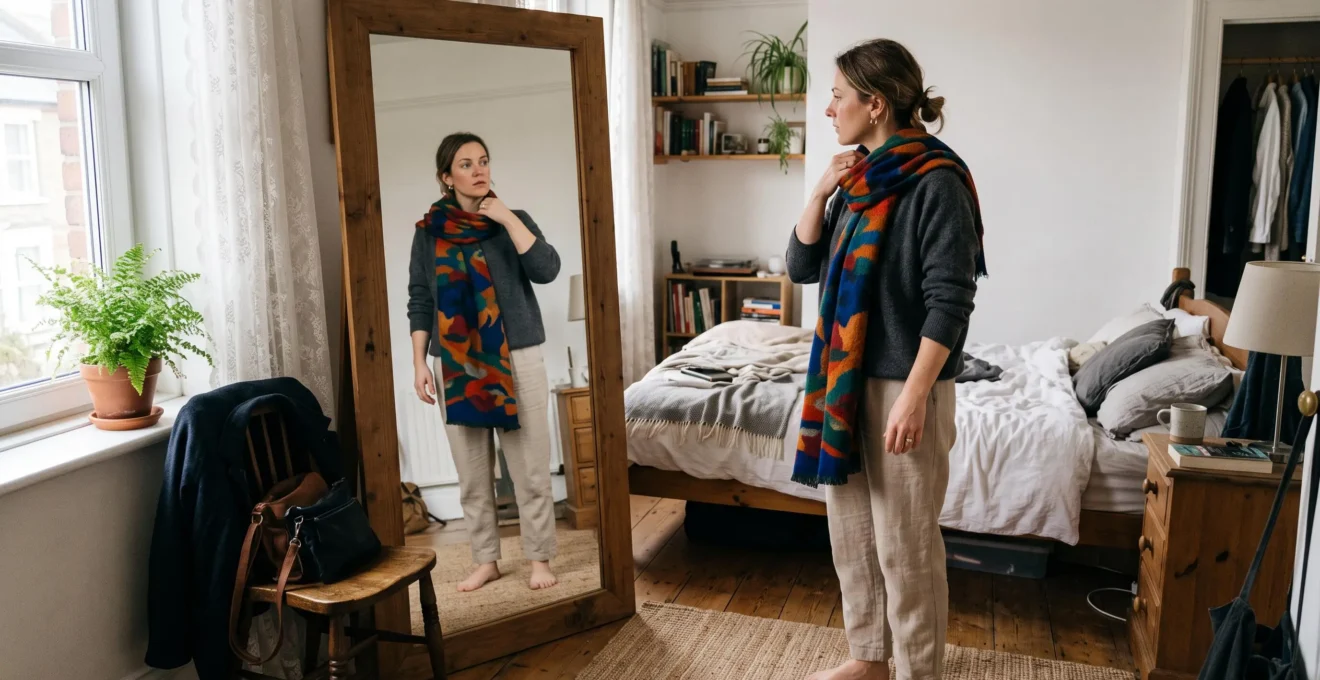
That dramatic jacket looked perfect when you bought it. Those sculptural earrings seemed exciting in the mirror. Yet when it is time to leave home, you reach for the same familiar jeans, plain knit and understated accessories.
The problem is not necessarily that your statement pieces are too bold. Often, they simply lack a comfortable place within the outfits you already wear.
Wearing a statement piece without feeling overdressed starts with controlling what surrounds it. A striking colour, unusual silhouette or oversized accessory becomes easier to wear when the remaining elements support rather than compete with it. Proportion, texture, occasion and personal comfort matter more than following a rigid rule about how much colour or jewellery is acceptable.
There is also no need to replace your wardrobe or suddenly dress more extravagantly. With a reliable neutral foundation, a few deliberate combinations and a little practice, even the pieces that currently stay in your wardrobe can become useful parts of everyday dressing.
Statement dressing: the essentials
- Choose one clear focal point and let simpler pieces provide balance, especially when experimenting.
- Adjust the visual intensity through proportions, footwear, layers and accessories rather than automatically changing the statement piece.
- Build confidence through familiar outfit combinations and low-pressure occasions before trying more expressive styling.
- Why Do Statement Pieces Feel “Too Much” Even When You Love Them at Home?
- How to Style One Statement Piece 5 Ways Without Buying Anything New?
- Statement Colour, Print, or Shape: Which Works Best If You Dress Mostly Neutral?
- The Styling Mistake That Makes a Statement Piece Look Cheap
- When Should You Add the Statement Piece: Before Shoes or After Outerwear?
- Statement Piece or Clean Minimal Fit: Which Gets More Compliments at a Work Event?
- How to Start Wearing Jewellery With 1 Piece So It Doesn’t Feel Awkward?
- How Do You Build a Memorable Look When You Only Have 10 Minutes to Get Dressed?
Why Do Statement Pieces Feel “Too Much” Even When You Love Them at Home?
Statement pieces often feel excessive outside the house because their appearance changes with context and because wearing something unfamiliar can make you unusually conscious of your outfit. A garment that looks balanced in a bedroom mirror may attract more attention in a familiar everyday setting. The solution is to distinguish an actual styling imbalance from the temporary discomfort of wearing something new.
At home, you usually assess the item in relatively controlled surroundings. You might see a bright coat against a neutral wall or admire a patterned blouse while wearing basic trousers. Outside, the same item is seen in motion, alongside other people, under different lighting and within the expectations of a particular setting.
That change does not mean the garment suddenly looks worse. It means you are evaluating it within a more complicated visual environment.
A useful styling concept is the visual-volume budget. This is a metaphor, not a measurable psychological limit: imagine that each noticeable element contributes to the overall intensity of an outfit.
- A bright red jacket adds a strong colour focal point.
- A patterned handbag introduces another noticeable surface.
- Oversized earrings create an additional point of interest near the face.
- Statement shoes can pull attention towards the lower half of the outfit.
These elements can coexist successfully, but they require an intentional relationship. If you feel overwhelmed, reduce one competing detail rather than removing the piece you originally wanted to wear.
It also helps to identify whether discomfort comes from scale or unfamiliarity. A very large silhouette might genuinely disrupt the proportions you prefer. Conversely, small colourful earrings could feel conspicuous simply because you normally wear none.
Try the item on an ordinary errand: collecting a parcel, visiting a café or taking a short walk. Notice whether you can move naturally and whether the outfit seems balanced when viewed as a whole. Avoid interpreting every passing glance as a judgement about your clothes.
Clothing can influence psychological experience, although research does not establish that any particular garment will make someone more confident. A meta-analysis of enclothed cognition research examined 105 effects from 40 studies and also highlighted replication concerns in earlier work. It supports taking the relationship between clothing and experience seriously without treating confidence as a guaranteed outcome.
The first goal is not to attract compliments. It is to become comfortable enough with the piece to judge the outfit on its merits rather than on the novelty of wearing it.
How to Style One Statement Piece 5 Ways Without Buying Anything New?
To style one statement piece five ways, start with two neutral wardrobe staples that already work together, then change one supporting element at a time. Vary the trousers, footwear, outer layer or silhouette while keeping the bold item constant. This creates outfits with different levels of visual intensity without requiring additional purchases or a completely different personal style.
Begin with a wardrobe audit. Identify your dependable neutral colours, comfortable silhouettes and everyday fabric textures. Denim, plain knitwear, tailored trousers, simple shirts and familiar shoes are potential support pieces, provided you actually enjoy wearing them.
For a practical example, imagine a bright red structured jacket that you love but rarely wear. The following five combinations are hypothetical styling exercises using common wardrobe staples, not prescriptions for what everyone should own.
| Styling approach | Outfit combination | Visual effect |
|---|---|---|
| 1. Casual balance | Red jacket, plain T-shirt, blue jeans and flat shoes | Relaxed and approachable |
| 2. Tonal contrast | Red jacket, black knit, black trousers and black shoes | Defined focal point against a quiet base |
| 3. Soft contrast | Red jacket, cream top, beige trousers and neutral footwear | Lower contrast through softer supporting colours |
| 4. Silhouette variation | Red jacket, plain fitted top, straight skirt and understated shoes | Emphasis on the jacket’s structure |
| 5. Intentional high contrast | Red jacket, simple top, dark jeans and a second bold accessory | More expressive styling with two deliberate focal points |
The first four outfits follow a simple principle: let the jacket remain the clearest statement. The fifth deliberately breaks that principle. Two strong elements can work when they share a colour, material, shape or coherent aesthetic direction.
The aim is not to eliminate every interesting detail. It is to ensure that the details look connected.
Another useful technique is the dial-up, dial-down method. Denim and casual flats may make the jacket feel less formal, while tailored monochromatic separates can create a more polished evening look. The jacket stays the same; its surrounding context changes.
This principle is consistent with Who What Wear UK’s outfit-styling tips, which suggest introducing one bold item alongside everyday basics while also recognising that mixing multiple expressive pieces can be a valid personal choice.
When experimenting, photograph the five combinations in consistent lighting. Seeing the complete silhouette often makes differences in proportion clearer than repeatedly analysing an item on a hanger.
If none of the combinations feels right, inspect fit, comfort and proportions before assuming you need to shop. The missing ingredient may be a different arrangement of clothes you already have.
Statement Colour, Print, or Shape: Which Works Best If You Dress Mostly Neutral?
For someone who mostly wears neutrals, a statement colour is often the easiest starting point because it changes the outfit without necessarily changing its silhouette. Prints can also integrate smoothly when they repeat a neutral already in the wardrobe. Dramatic shapes generally require more attention to proportions and comfort, although personal preference matters more than any universal hierarchy.
Think about how much of your usual outfit you are prepared to change. A colourful bag might work immediately with your standard clothes, while an oversized sculptural jacket could require experimenting with different trousers, layers or lengths.
The distinction becomes clearer when comparing the three categories.
| Statement type | Easy starting point | Main styling consideration |
|---|---|---|
| Colour | Bright bag, shoes, scarf or cardigan | How the accent relates to your existing neutrals |
| Patterned scarf, blouse or skirt | Whether the pattern shares a colour with the outfit | |
| Shape | Structured sleeves, unusual jacket or architectural accessory | Volume, movement and overall proportions |
A neutral wardrobe makes experimentation easier because its existing colours can provide a consistent backdrop. Black, white, grey, navy, brown and cream can each support a distinctive accent, although different combinations create different levels of contrast.
Placement matters as much as category. A vivid scarf or large patterned collar is prominent near the face. The same visual intensity in a handbag or pair of shoes may feel less conspicuous to someone who is new to expressive dressing.
That does not make accessories objectively safer or less noticeable. It gives you an adjustable way to explore the look while retaining the clothing shapes you already trust.
Shape statements deserve particular attention. If you feel most comfortable in close-fitting jackets, choosing an extremely oversized coat solely because it looks interesting online may create unnecessary discomfort.
Instead, try an architectural handbag, a sculptural cuff or a garment with one distinctive detail. You can explore dramatic design without abandoning your preferred silhouette.
Before investing in a new category, test one example through a borrowed item, a second-hand purchase or an existing garment styled differently. Wear it in a realistic setting rather than making the decision exclusively in a fitting-room mirror.
The best first statement piece is not necessarily the smallest or quietest. It is the one that feels interesting while still respecting how you want your clothes to fit, move and function.
The Styling Mistake That Makes a Statement Piece Look Cheap
The mistake most likely to undermine a statement piece is allowing several unrelated details to compete without a clear visual direction. Excessive novelty, distracting proportions or poorly maintained garments can make an outfit feel less considered, regardless of its purchase price. Instead of automatically adding more accessories, refine the fit, establish one focal point and edit the supporting elements.
Imagine a hypothetical outfit combining a heavily patterned jacket, embellished shoes, a large logo bag, oversized earrings and a brightly coloured belt. Each piece may look appealing individually, but together they create several competing points of attention.
The difficulty is not that wearing multiple bold items is inherently wrong. Maximalist dressing can be sophisticated and highly intentional. The difficulty arises when the elements have no convincing relationship.
Visual coherence is more useful than a strict limit on bold pieces. Two expressive accessories might share a metallic finish, repeated shape or colour family. Without that connection, the outfit may feel assembled rather than styled.
Trend-heavy combinations can also make a distinctive garment harder to wear repeatedly. Pairing it with simple, familiar clothing creates more opportunities to reinterpret the piece as your preferences evolve.
Fit is the next priority. Check whether an oversized sleeve overwhelms your hands, a jacket pulls across the shoulders, or an unusual hem interrupts the proportions you prefer. Small alterations or changes to the supporting garments may improve the overall result more than another purchase.
Maintenance matters too. Creased fabrics, loose threads, visibly worn finishes or inappropriate garment care can distract from an otherwise intentional outfit.
In Sara Walker‘s five outfit-styling tips for Who What Wear, the stylist discusses focal accessories, tonal coordination, garment care and simplifying an outfit when it feels unresolved. These are professional styling recommendations rather than measured rules for what makes clothes appear expensive.
The five-step statement-piece edit
- Identify your focal point: name the single feature you most want noticed. Write down the item and the feature, such as “red jacket—colour”.
- Check the supporting pieces: identify two garments that keep the outfit coherent. Record the combination for future use.
- Assess proportions: view the full silhouette from the front and side. Identify one fit adjustment if necessary.
- Remove one competing detail: try the outfit with and without a secondary accessory. Take two comparison photographs.
- Complete the finishing check: inspect creases, closures, comfort and footwear. Save a photograph of the final wearable outfit.
The final edit should preserve what originally made you excited about the piece. Removing every distinctive feature would defeat the purpose.
A well-styled statement item does not need to resemble luxury clothing or follow conventional ideas of elegance. It needs enough visual intention that its boldness feels chosen rather than accidental.
When Should You Add the Statement Piece: Before Shoes or After Outerwear?
Add your statement piece when you can assess it alongside the layers that will actually be visible during the day. If your coat remains on, treat outerwear as part of the main outfit. If you will remove it indoors, evaluate the underneath look separately. Choose shoes last to either reinforce the focal point or restore visual balance.
Getting dressed is not just a matter of choosing individual garments. It is also about understanding how the outfit changes when layers are removed, accessories are added and you move between environments.
For example, a brightly patterned blouse under a plain navy coat creates two different impressions. Outside, the outfit may look understated. Indoors, the blouse becomes the focal point as soon as the coat comes off.
The reverse happens with a statement coat over neutral clothing. The dramatic outer layer may define your appearance outdoors, while the underlying outfit remains intentionally quiet.
Plan for the version of the outfit people will actually see. If you expect to spend most of the day indoors, do not judge the entire combination exclusively with your coat on.
There is also the issue of competing outerwear. A brightly coloured coat worn over a heavily printed dress can create a more expressive look than either garment alone. That may be desirable, but the colours, shapes and proportions should feel compatible.
A practical morning sequence is to dress from the base outfit outward:
- Put on your reliable base garments.
- Add the statement item and assess the complete silhouette.
- Try the outerwear you will genuinely need.
- Choose shoes that either echo a colour or texture from the focal item or remain deliberately neutral.
- Check the outfit both with and without removable layers.
Shoes are particularly useful as a closing statement. Simple footwear can reduce visual competition around an expressive coat or dress. Alternatively, shoes in a related colour can make a statement accessory feel more integrated.
Neither choice is automatically better. The decision depends on whether you want to reinforce the central theme or soften the overall impression.
Before leaving, imagine three moments: walking outdoors, arriving at your destination and sitting down after removing your coat. Consider which garment or accessory draws attention first in each situation.
This approach is particularly useful when dressing for a professional event, where the transition from street clothes to indoor attire can change the impression you want to create.
Statement Piece or Clean Minimal Fit: Which Gets More Compliments at a Work Event?
Neither a statement piece nor a clean minimal outfit is guaranteed to receive more compliments at a work event. Fit, visual coherence, dress expectations and individual taste all affect how an outfit is perceived. A restrained outfit with one deliberate detail is often a practical compromise when you want to look memorable without feeling uncomfortable or distracting yourself from the occasion.
The first consideration is the event itself. A creative industry gathering, a formal client reception and a relaxed internal networking evening may all invite different levels of self-expression.
Instead of asking whether a statement item is too bold in isolation, assess how it relates to the event’s dress expectations.
| Setting | Considered styling option | What to prioritise |
|---|---|---|
| Formal client event | Well-fitting neutral separates with distinctive jewellery or a refined scarf | Comfort, polish and alignment with the dress code |
| Creative networking event | Architectural jacket, expressive shoes or a patterned garment | Personality and deliberate proportions |
| General workplace gathering | Familiar minimal outfit with one controlled accent | Versatility and confidence in conversation |
These are styling options, not universal workplace rules. Professional expectations vary substantially between organisations, industries and individuals.
Compliments are also a limited measure of an outfit’s success. Some people praise unusual clothing because it is noticeable; others admire understated combinations without commenting.
Attention is not the same as approval, and approval is not the same as personal comfort. A dramatic look may generate conversation while a simple one creates the impression you personally wanted.
One effective middle ground is the one deliberate detail approach. Wear a well-fitting outfit you already trust, then add sculptural earrings, a colourful scarf, distinctive shoes or a carefully chosen piece of jewellery.
That single addition gives the look character without requiring you to navigate several unfamiliar styling decisions at once.
Before choosing, consider whether you can comfortably sit, stand, walk and hold conversations without repeatedly adjusting your clothes. If a sleeve constantly slips, a necklace catches on your collar or shoes make standing difficult, the outfit may not be practical regardless of its appearance.
Clothing and psychological experience can interact, but neither a bold garment nor a minimal one reliably produces confidence. It is more useful to treat comfort and personal preference as part of the decision than to promise a particular social reaction.
Choose the option that supports your participation in the event. A statement piece succeeds when it adds to your presence rather than becoming something you must continuously manage.
How to Start Wearing Jewellery With 1 Piece So It Doesn’t Feel Awkward?
Start with one piece of jewellery that feels slightly more expressive than your usual accessories, such as a sculptural ring, pendant necklace or statement earrings. Wear it with a familiar outfit and avoid introducing several new details simultaneously. Begin in comfortable settings, check that the jewellery works with your clothing and gradually increase its visibility only if you enjoy wearing it.
Jewellery can be a convenient introduction to statement styling because many pieces are easy to remove, reposition or substitute. Unlike a dramatic coat or dress, an accessory does not necessarily require changing the structure of an outfit.
Begin by selecting one hero accessory. If you choose large earrings, let them remain the primary point of interest near your face. If you choose a prominent necklace, consider keeping the surrounding jewellery quieter.
Matching metal finishes to existing bag hardware, belt buckles or a watch is one way to create visual continuity. It is not compulsory: mixing metals can also look deliberate when the combination feels consistent with your personal style.
Next, pay attention to the relationship between jewellery and clothing.
- High-neck tops: visible earrings or a necklace worn over the fabric can provide definition.
- Open necklines: a pendant or shorter necklace can occupy the available space without necessarily needing additional jewellery.
- Structured collars: earrings or rings can avoid visual competition with prominent lapels and collar details.
- Simple sleeves: a cuff or bracelet can introduce an architectural detail without changing the outfit’s upper silhouette.
These combinations are starting points rather than fixed rules. Jewellery scale should also reflect comfort, weight, mobility and the way the accessory behaves during ordinary activities.
If wearing jewellery initially feels awkward, try a gradual progression. First wear the piece at home with an outfit you know well. Next, wear it on a routine outing. Later, incorporate it into an occasion where you want to look a little more expressive.
This progression gives you opportunities to assess real comfort rather than assuming everyone else is paying attention. Familiarity may make the piece feel more natural, but there is no guarantee that repeated wear will remove every feeling of self-consciousness.
Only add a second noticeable accessory when the first combination feels enjoyable. You can also decide that one distinctive piece is enough for your personal style.
Once you have a jewellery combination you trust, it can become part of a dependable outfit formula, especially on mornings when there is little time for experimentation.
What to carry into your next outfit
- Keep one tested neutral combination available so a bold item does not require rebuilding the entire outfit.
- Choose the level of expression according to your plans, available time and comfort rather than an imagined expectation to stand out.
- Record combinations that work in real life; a photograph of a successful outfit is more useful than remembering an isolated purchase.
How Do You Build a Memorable Look When You Only Have 10 Minutes to Get Dressed?
Build a memorable outfit in ten minutes by using a combination you have already tested: one dependable neutral base, one recognisable statement piece and one finishing element. Avoid experimenting with several unfamiliar items at once. Your goal is a coherent outfit with a clear focal point, not the most elaborate combination you can assemble before leaving.
The easiest way to make quick dressing feel intentional is to prepare a formula wardrobe. Instead of organising every decision around individual pieces, identify complete combinations that suit common occasions.
A practical formula might consist of black trousers, a plain knit and a colourful structured jacket. Another might combine jeans, a white shirt and a bold necklace. A third could use a simple dress, distinctive shoes and a neutral coat.
These are examples rather than mandatory wardrobe essentials. The best formulas are built from clothes that fit comfortably and are realistically available when you need them.
For a ten-minute morning, try this simple allocation:
- Minutes 1–3: put on a reliable base outfit that suits the weather and occasion.
- Minutes 4–5: add the statement piece you have already paired successfully with that base.
- Minutes 6–7: select practical shoes and outerwear.
- Minutes 8–9: check proportions, comfort and any competing accessories.
- Minute 10: complete a final check and leave without restarting the outfit.
The timings are a planning aid, not a tested guarantee. They work best when the clothes are clean, accessible and familiar.
Time pressure can encourage unnecessary additions: another necklace, a different belt or a more elaborate bag because the outfit does not immediately feel special. Rather than stacking accessories, change only one element from a combination you already like.
Use the remember-one-thing test as a creative filter. Imagine someone describing the outfit afterwards in one sentence: “The person wearing the bright blue coat” or “The person with the sculptural silver earrings.”
This does not predict what other people will remember. It simply helps you identify whether your chosen focal point is visually clear.
For recurring occasions, create a small personal outfit library. Photograph combinations that work, then note the season, footwear, outerwear and occasion. Over time, this becomes a practical reference for mornings when you have little energy for styling decisions.
A quick outfit can still express individuality. The preparation happens beforehand; the ten-minute routine is simply the process of assembling a combination that already feels like you.
Choose one statement item from your wardrobe today, pair it with two dependable basics and photograph the result. Wear that combination on a routine outing, then keep it in your outfit library if it works. The next time you have only ten minutes, your memorable look will already be waiting.
Can you wear more than one statement piece in the same outfit?
Yes. Multiple statement pieces can work when they share a deliberate visual relationship, such as a recurring colour, material, silhouette or aesthetic theme. Starting with one focal point is a useful learning method, not a permanent restriction. If the combination feels too busy, simplify one supporting element before abandoning the look.
Do statement pieces have to be expensive to look stylish?
No. Price alone does not establish whether a bold item will look cohesive with your clothes. Fit, construction, garment condition and styling choices are more practical factors to assess. An inexpensive statement accessory can work well with carefully maintained basics, while a costly garment may still be awkward to style or uncomfortable to wear.
Can petite or tall people wear oversized statement pieces?
Yes. Height does not automatically determine which expressive silhouettes are appropriate. Pay attention to how the garment’s length, shoulder placement, volume and movement relate to your preferred proportions. Trying different supporting silhouettes is usually more informative than following universal rules based on body height.
How can you make a bold outfit suitable for a casual dress code?
Try pairing the statement item with casual staples you already wear, such as plain denim, simple knitwear or understated flats, while respecting the setting’s actual dress requirements. Relaxed textures and familiar silhouettes can help a dramatic item feel more natural without removing its personality.
What if you still dislike wearing a statement piece after several attempts?
You do not need to force it. Check whether the discomfort comes from fit, fabric, movement, styling or simply a mismatch with your current preferences. Try a smaller accessory or a different type of statement if you want to continue experimenting. Personal style is not measured by how much visual attention you are willing to attract.