
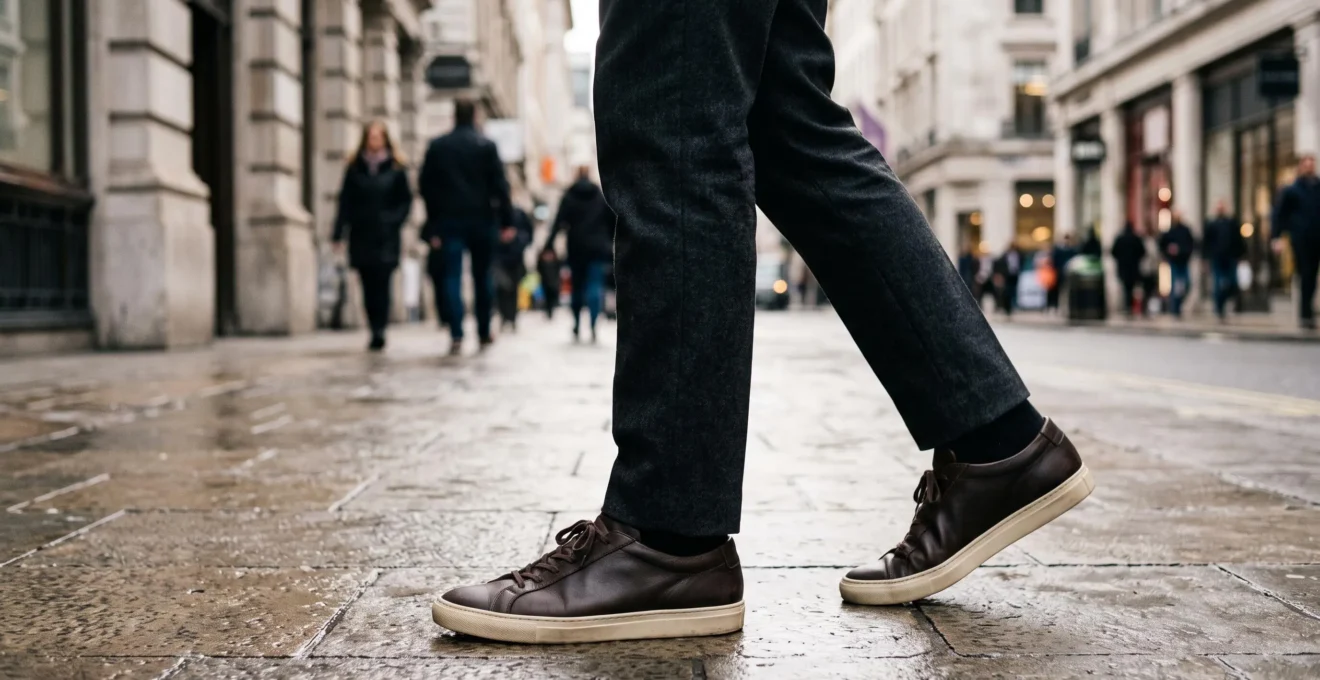
For most relaxed smart-casual wardrobes, a pair of low-profile leather sneakers in dark brown, black or another versatile neutral offers one of the strongest style upgrades under £150. If your working week involves tailored trousers, formal meetings or a stricter dress code, streamlined leather loafers may be the better investment.
The difference is not simply how expensive your shoes look. It is how consistently they complement the trousers, colours, proportions and formality of clothing you already own. A beautifully made statement shoe that works with one outfit may be less useful than a modestly priced pair that completes your everyday looks.
Instead of rebuilding your wardrobe, start at ground level. Identify the outfits you repeat, choose footwear that suits their shared style, and pay attention to details such as sole thickness, trouser length and maintenance. The aim is not to buy the most impressive shoes in isolation. It is to make the greatest number of outfits look considered.
The quickest way to upgrade your style with one pair of shoes
- Choose minimalist leather sneakers for versatile, relaxed smart casual; choose loafers when tailored trousers and smarter settings dominate.
- Test shoes against your five most-worn outfits. Four successful combinations make a stronger purchase than one spectacular look.
- Prioritise clean silhouettes, comfortable fit and well-maintained soles over logos, decorative features or a higher price tag.
- Why Do Shoes Change the Whole Outfit More Than Your Jacket Does?
- How to Choose One Pair of Shoes That Works With 80% of Your Wardrobe?
- Minimalist Sneakers or Loafers: Which Works Better for Smart Casual 5 Days a Week?
- The Shoe Detail That Can Make Your Whole Outfit Look Cheaper
- When Should You Replace Your Everyday Shoes Before They Drag Down Your Look?
- How to Test Leather Boots in 5 Minutes So You Don’t Need a Painful Break-In?
- How to Choose Minimalist Sneakers That Work With Trousers, Not Just Jeans?
- Which Minimalist Sneakers Still Look Sharp After a Rainy Commute?
Why Do Shoes Change the Whole Outfit More Than Your Jacket Does?
Shoes can change how an entire outfit is perceived because they establish a visual connection between your clothing and the setting. Their shape, condition and formality influence whether jeans appear relaxed or polished and whether tailored trousers feel contemporary or conventional. Unlike an occasional jacket, the same everyday shoes may appear in most of your weekly outfits.
Imagine dark straight-leg jeans, a plain knitted jumper and an unstructured jacket. Add battered running trainers, and the outfit becomes distinctly casual. Replace them with clean, low-profile leather sneakers, and the same clothes can look more deliberate. Switch to polished loafers, and the result moves closer to traditional smart casual.
The shoes have not improved the quality of the other garments. They have changed the visual relationship between them.
Footwear acts as a formality cue. A bulky technical trainer suggests sport and comfort, while a refined leather shoe introduces structure. Neither is inherently superior, but a mismatch can make otherwise compatible clothes feel disconnected.
There is also a practical reason to prioritise footwear within a limited budget: frequency of wear. You might rotate several jackets but rely on one or two pairs of shoes across commuting, shopping, social occasions and work.
A versatile pair therefore has more opportunities to improve your appearance. This is a wardrobe-planning principle, not a scientifically established ranking of fashion purchases.
Consider two hypothetical £120 purchases. One pair of bold statement boots completes a single weekend outfit. Another pair of understated leather sneakers works with four regular combinations. The second has greater everyday usefulness, even if the boots make a stronger first impression.
The important distinction is between impact per outfit and impact across your wardrobe. A striking shoe may win the first comparison; a versatile one often wins the second.
Once footwear is treated as part of an outfit system rather than an isolated purchase, the next question becomes measurable: how many of your existing looks can one pair actually support?
How to Choose One Pair of Shoes That Works With 80% of Your Wardrobe?
To find shoes that work with approximately 80% of your wardrobe, identify your five most-worn outfits and check whether one pair suits at least four. Compare formality, trouser shape and colour temperature rather than matching colours alone. The method is a practical buying test, not a guarantee: wardrobes containing very different dress codes may need more than one footwear style.
Start with actual outfits, not imagined occasions. If you usually wear dark jeans three days a week, chinos once and tailored trousers once, those combinations deserve more influence than a suit you wear twice a year.
Lay the five outfits out or photograph them. Assess candidate shoes against each look. A pair that genuinely suits four earns consideration; a pair that works with only two is better understood as an additional style choice rather than your main wardrobe anchor.
Match formality before colour. Black shoes do not automatically work with black trousers. A chunky black running trainer may look less appropriate with tailored black wool trousers than a refined dark brown leather loafer, despite the colour match.
The following guide describes useful styling tendencies rather than strict dress rules.
| Shoe type | Most natural pairings | Main limitation |
|---|---|---|
| Minimalist sneakers | Straight jeans, chinos, relaxed tailored trousers | May be too casual for formal workplaces |
| Leather loafers | Chinos, smart denim, tailored trousers | Less practical for some long or wet commutes |
| Streamlined boots | Denim, heavier chinos, wool trousers | Can feel visually heavy with light summer outfits |
| Derby shoes | Tailored trousers, smart chinos, structured denim | May appear overly formal with sporty clothing |
Colour temperature matters after formality. Warm brown footwear often integrates naturally with olive, cream, tobacco and earthy denim combinations. Black or charcoal shoes can support cooler greys, black trousers and darker contemporary outfits. These are flexible guidelines rather than rules preventing mixed colours.
Ask yourself: do most of my outfits already share a similar level of formality? If the answer is yes, one versatile pair may cover most situations. If your week alternates between corporate tailoring, gym clothes and outdoor workwear, the 80% target is probably unrealistic.
Your five-step wardrobe compatibility check
- Photograph your five most frequently worn outfits and save them together as a single reference.
- Label each outfit casual, smart casual or formal, producing a five-item formality overview.
- Compare one candidate pair against every outfit, recording five clear yes-or-no decisions.
- Check the candidate with your actual trouser hems and usual socks, noting any visible proportion clashes.
- Count the successful combinations and record whether the shoes complement at least four of your five outfits.
The result should narrow your choices considerably. For many readers, the final decision will be between two adaptable styles: minimalist sneakers and loafers.
Minimalist Sneakers or Loafers: Which Works Better for Smart Casual 5 Days a Week?
Minimalist sneakers generally make more sense for a five-day smart-casual routine involving jeans, walking and relaxed offices. Loafers become stronger contenders when tailored trousers, meetings and a polished dress code dominate. Neither wins universally: commute conditions, acceptable workplace footwear and the direction of your personal style determine which pair delivers better value.
Start with the environment where you spend most of your week. In a jeans-friendly office, clean leather sneakers may feel entirely appropriate. In a workplace where tailored trousers are expected, loafers can maintain a smarter appearance without requiring a fully formal lace-up shoe.
Then consider the commute. Comfortable, flexible sneakers may be convenient for longer urban walks. Loafers can also be comfortable, but their fit, sole grip and resistance to wet conditions deserve particular attention.
| Decision factor | Minimalist sneakers | Leather loafers |
|---|---|---|
| Jeans-friendly workplace | Often the easier everyday choice | Useful for a more polished look |
| Tailored-trouser dress code | Depends on workplace expectations | Usually a natural match |
| Long walking commute | Potentially convenient with suitable fit and support | Requires careful fit and sole assessment |
| Regular wet weather | Leather and sole construction are important | Leather protection and traction are important |
| Personal style direction | Modern and relaxed | Classic and refined |
| Visible ageing | Midsole marks and upper creases | Leather scuffs and heel-edge wear |
The boundaries between these styles are less rigid than traditional dress categories suggest. The Guardian‘s commentary on styling smart jeans considers loafers, clean trainers and ankle boots as compatible choices for smarter denim, while emphasising the relevance of trouser cut and hem length.
To make sneakers look smarter, favour smooth leather, restrained branding and relatively slim soles. To make loafers feel more relaxed, combine them with straight-leg denim, a suitable trouser hem and socks chosen intentionally.
The sock line is particularly important. A cropped trouser exposing bright athletic socks changes the impression of even a polished leather loafer. Similarly, dark fine-knit socks can help minimalist sneakers integrate with tailored trousers.
Maintenance is the hidden cost. Light sneaker midsoles can show dirt quickly, while leather loafers may require regular polishing or conditioning. Rain exposure adds another consideration, especially for delicate finishes and leather soles.
Whatever the style, buying a clean-looking pair is only half the decision. Small details of construction and condition determine whether it continues to elevate your outfits.
The Shoe Detail That Can Make Your Whole Outfit Look Cheaper
The condition of a shoe’s sole and visible edges can have an outsized effect on how polished an outfit appears. Yellowed midsoles, heavily scuffed toes and damaged heel edges draw attention away from otherwise tidy clothing. A simple, inexpensive pair with a clean silhouette and maintained finish can look more considered than a costlier pair showing obvious neglect.
Look at the point where the upper meets the sole. On a leather shoe, an uneven, scratched or faded sole edge interrupts the clean outline. On a sneaker, a discoloured white midsole can make the entire shoe appear older, even when the upper remains in reasonable condition.
These imperfections are especially noticeable with plain outfits because there are fewer competing details. A minimalist wardrobe depends heavily on proportion, texture and maintenance.
Three practical corrections can make a substantial visual difference:
- Edge dressing: use an appropriate product on compatible leather sole edges to restore a more uniform appearance.
- Midsole cleaning: remove surface dirt using a gentle method suited to the sole material, without aggressive abrasion.
- Heel repair: ask a repair professional to assess worn heel tips or heel components before uneven wear develops further.
The aim is not to make every pair appear brand new. Natural leather creases and subtle signs of use can be attractive. The issue is whether wear looks consistent with a cared-for shoe or suggests deterioration.
Excess decoration can create a similar problem even when the shoes are immaculate. Large logos, contrasting stitching, oversized soles and combinations of shiny and technical materials introduce visual complexity.
Those details can work in expressive streetwear, but they are less versatile with understated tailoring, knitted basics and simple denim.
When comparing two hypothetical pairs costing £60 and £140, judge them without considering the labels. Examine the silhouette from the side, the consistency of the finish, the sole proportions and the quality of the visible edges. The higher price alone does not establish superior styling value.
Simple is not automatically better, but simple is often easier to combine. This is particularly useful when the goal is to make one pair work across several outfits.
If cleaning and minor repairs no longer restore an acceptable appearance, the decision shifts from styling to replacement. Knowing where that boundary lies can protect a limited footwear budget.
When Should You Replace Your Everyday Shoes Before They Drag Down Your Look?
Replace everyday shoes when structural wear, poor comfort or persistent visible damage can no longer be corrected sensibly. Dirty midsoles and superficial leather scuffs may be restorable, while collapsed heel counters, severely worn soles and distorted uppers can signal more serious deterioration. Assess repairability before buying another pair, especially when your total budget is under £150.
Shoes often deteriorate gradually enough that their owner stops noticing. Someone viewing them from a distance, especially while you walk, may see worn heel edges, a distorted silhouette or uneven movement more clearly.
Inspect four areas regularly:
- Outsole: check for worn tread, uneven abrasion, reduced grip and exposed or damaged underlying material.
- Heel: look for excessive wear on one edge, instability or a heel structure that has lost its intended shape.
- Upper: distinguish ordinary creasing at the toe break from deep cracks, torn seams or material failure.
- Interior lining: check for holes, rough exposed surfaces and damage around the heel that may affect comfort.
A worn heel component does not always require replacing the entire shoe. Repairability depends on how the footwear is constructed and whether its upper and underlying structure remain sound.
Clarks‘ shoe repair and resoling advice explains that sole replacement and other repairs may be appropriate for footwear with usable uppers, while significant structural damage can make replacement more sensible.
Leather footwear with repair-friendly construction may justify professional maintenance. Conversely, a heavily bonded sneaker with a compressed or structurally damaged midsole may offer limited repair options.
Compare the quoted repair cost with the price of a suitable replacement and the amount of additional use you realistically expect. There is no universal repair-price threshold that makes sense for every shoe.
Rotation is another consideration. Wearing the same footwear continuously reduces the opportunity for retained moisture to dry between uses. Alternating pairs can give materials more recovery time, although it does not guarantee a particular increase in lifespan.
For example, someone with a strict £150 total budget might prefer two complementary, affordable pairs over one more expensive pair worn every day. That choice can improve wardrobe coverage and allow rotation, but its durability depends on the shoes themselves and how they are used.
Once replacement is justified, fit becomes as important as appearance. This matters particularly for structured leather boots, where an attractive pair can become an expensive mistake if it causes discomfort.
How to Test Leather Boots in 5 Minutes So You Don’t Need a Painful Break-In?
A five-minute in-store boot check can reveal obvious fit and flexibility problems before purchase. Test toe-room comfort, the stiffness of the vamp, heel stability, sole movement and walking comfort on a firm surface. It cannot guarantee a painless break-in period, but it can help reject boots that already pinch, slip excessively or resist your natural walking motion.
Bring the socks you intend to wear with the boots. Socks affect available space, friction and how securely the heel sits. Try both boots, ideally after confirming that the size and shape accommodate both feet.
The following procedure is a practical screening routine rather than a scientifically validated five-minute predictor of future comfort.
- First minute — assess immediate fit. Stand naturally in both boots. Check for pressure at the widest part of the forefoot, cramped toes or uncomfortable contact against the upper.
- Second minute — inspect the vamp. Press the leather gently above the toe area and observe its flexibility. Walk a few steps to identify whether the upper creates a sharp pressure point as it creases.
- Third minute — check the heel counter. Assess whether the rear structure feels supportive and keeps the heel reasonably secure without digging painfully into it.
- Fourth minute — assess sole flex. With a boot off the foot, gently test its movement around the ball of the foot without forcing it. Check whether the sole’s natural flex corresponds reasonably to your walking motion.
- Fifth minute — walk on a firm floor. Walk normally, turn, stop and start again. Notice forefoot pressure, repeated heel friction and any instability.
A structured leather boot may feel firmer than a lightweight sneaker. Firmness alone is not a problem. Sharp pinching, persistent rubbing or compressed toes are warning signs that should not be dismissed as normal break-in discomfort.
The distinction between firm new leather and an unsuitable last shape is crucial. The last is the three-dimensional form around which a shoe is built. If its shape conflicts with the width or contours of your foot, simply waiting for the leather to soften may not resolve the problem.
The American Podiatric Medical Association footwear-fit recommendations emphasise selecting shoes that feel supportive and comfortable at the outset rather than relying on break-in to correct an uncomfortable fit. Although the referenced guidance addresses older adults, that fitting principle is useful when evaluating boots.
Construction influences how boots move. Cemented, Blake-stitched and Goodyear-welted footwear can have different flexibility characteristics depending on the materials, sole thickness and design. A construction label alone cannot determine comfort.
Five minutes may expose an immediate problem, but it cannot reproduce a full day of standing, commuting and walking. Check the seller’s return conditions before committing, particularly if you expect to assess the boots indoors at home.
If boots are not essential to your wardrobe, a well-fitted minimalist sneaker may offer an easier everyday alternative. Its usefulness, however, depends heavily on how it interacts with your trousers.
How to Choose Minimalist Sneakers That Work With Trousers, Not Just Jeans?
Minimalist sneakers work best with tailored trousers when they have a restrained sole profile, smooth neutral uppers and little visible branding. The trouser hem should fall cleanly over or near the shoe without bunching awkwardly. Sock colour, ankle exposure and the width of the trouser leg can influence whether the overall combination looks polished or noticeably sporty.
The main challenge is visual proportion. Jeans generally offer more tolerance for bulky sneakers because denim has its own casual character and often a substantial fabric weight. Tailored trousers can create a narrower, cleaner line that a thick trainer sole interrupts.
Begin with three design criteria:
- Low-profile sole: look for a relatively slim silhouette that does not dominate the trouser opening. The sole need not be exceptionally thin or sacrifice appropriate comfort.
- Neutral, refined upper: smooth black, dark brown, off-white or similarly understated leather can integrate more easily with smart-casual clothing than brightly coloured technical mesh.
- Minimal side detailing: restrained branding, tonal stitching and uncomplicated panels reduce competing visual elements.
Suede can also complement tailoring, especially in muted colours, but demands more attention in wet conditions. White leather can look polished when clean, although its visible edges tend to reveal dirt and marks more readily than some darker alternatives.
Next, examine the trouser break: the point where the fabric meets the shoe. A clean hem resting lightly near the upper often creates a more coherent silhouette than excessive fabric stacking on the sneaker.
Cropped and tapered trousers introduce another variable because they expose the ankle or socks. With dark tailored trousers and dark sneakers, similarly toned socks can create visual continuity. A deliberate contrast can also work, but bright athletic socks often shift the outfit towards a sportier aesthetic.
The ideal silhouette depends on trouser width. Slim tailoring may suit compact sneakers, while wider pleated trousers can accommodate slightly more substantial footwear without losing balance.
A common buying mistake is expecting the same sneaker to excel with every kind of trousers. A chunky mesh trainer may work beautifully with casual jeans and perform poorly with formal wool trousers. A sleek leather sneaker may be excellent with chinos but visually understated with oversized streetwear.
Instead of chasing universal versatility, choose according to your most frequently worn trouser shape. If tailored trousers dominate your week, prioritise the cleaner silhouette. If jeans dominate, allow more flexibility in sole shape and materials.
Once the silhouette works, the final consideration is practical: whether the pair will retain its appearance through the conditions you encounter on a normal working day.
Key takeaways before choosing commuter-friendly sneakers
- Choose the shoe silhouette that complements your most-worn trousers, rather than the one that looks most striking on its own.
- Inspect materials, sole colour and construction with your usual walking conditions in mind, not just how the shoes look indoors.
- Consider cleaning and drying requirements before purchase, particularly when one pair will be worn through frequent wet commutes.
Which Minimalist Sneakers Still Look Sharp After a Rainy Commute?
For regular light-rain commuting, minimalist sneakers with smooth dark leather uppers, relatively simple construction and tonal soles are often a practical style choice. They can be easier to wipe clean and may conceal certain marks better than pale suede or bright white sneakers. However, rain resistance depends on the complete shoe construction, and ordinary leather sneakers should not be assumed waterproof.
Material choice is the first consideration. Smooth full-grain leather can tolerate occasional light moisture when appropriately cared for, although water may still penetrate through seams, stitching and openings. Suede is more sensitive to visible water marks and requires material-specific protection and cleaning.
Coated canvas may resist some surface moisture, depending on the coating, but its practical performance cannot be judged from the fabric label alone. For prolonged rainfall or standing water, dedicated waterproof construction is a more dependable criterion than minimalist styling.
| Upper material | Practical advantage | Main consideration |
|---|---|---|
| Smooth leather | Surface dirt is often straightforward to wipe away | Requires suitable care and is not inherently waterproof |
| Suede | Refined texture that pairs well with smart casual | Water marks and inappropriate cleaning can affect appearance |
| Coated canvas | Some constructions can resist light surface moisture | Protection depends on coating, seams and overall design |
| Technical mesh | Can offer ventilation and flexible construction | May absorb moisture or look more athletic than desired |
Consider colour and sole finish as well. Dark leather with a tonal sole can make some surface marks less obvious, whereas pale midsoles make grime more visible. This is a styling consideration, not proof that dark footwear is inherently more durable or water-resistant.
Maintenance after commuting matters regardless of the material. Remove mud and surface dirt using a suitable cloth or soft brush. For damp footwear, use absorbent paper if appropriate and leave it in a ventilated location away from direct heat.
REI‘s running-shoe cleaning and drying instructions recommend gentle cleaning, moisture absorption with paper and drying without excessive heat. The advice concerns running shoes, but these drying precautions are relevant to many types of casual footwear.
Replace saturated paper as needed and allow shoes to dry thoroughly before wearing them again. Avoid radiators, tumble dryers and other concentrated heat sources, which can affect shape and adhesives.
Before first wear, consider a protective treatment specifically compatible with the shoe material and the manufacturer’s instructions. A water-repellent spray may reduce some surface wetting, but it cannot turn an ordinary sneaker into a fully waterproof shoe.
For a regular five-day commute, it is sensible to think beyond initial appearance. A pair that cleans easily, fits comfortably and has adequate outsole grip may provide more practical value than a delicate style that requires frequent restoration.
Under a £150 budget, the strongest overall choice is therefore not a particular brand or an unverified claim of superior waterproofing. It is a well-fitting, understated shoe that suits your trousers, tolerates your normal conditions and remains straightforward to maintain.
Before buying, put your five regular outfits side by side, shortlist one or two footwear styles, and assess fit, silhouette, commute suitability and maintenance needs. Choose the pair that improves your actual week, not merely the one that looks best in the shop.
Is it better to buy one £150 pair or two cheaper pairs?
One well-made pair may be preferable if it comfortably handles almost all your everyday outfits and conditions. Two complementary pairs can be more useful when you need different levels of formality or want to alternate footwear between wears. Compare fit, construction, repairability and expected use rather than assuming that either spending strategy will automatically last longer.
Are black or brown shoes more versatile for smart casual?
Black shoes often integrate easily with charcoal, black, grey and cooler-toned outfits. Brown shoes can work particularly well with navy denim, olive chinos, cream knitwear and warmer colour combinations. The best choice depends on your existing wardrobe. Shoe shape and formality usually matter more than matching a specific colour perfectly.
Can one pair of minimalist sneakers work for both office and weekend outfits?
Yes, when the office dress code permits smart sneakers and the rest of your wardrobe shares a relatively relaxed level of formality. Smooth leather uppers, restrained details and balanced soles make the transition easier. A workplace requiring conventional formal shoes may still call for loafers, derbies or another appropriate option.
Should minimalist leather sneakers fit tightly because they will stretch?
No. Leather may soften and adapt somewhat with use, but uncomfortable pressure, cramped toes or a clearly unsuitable shape should not be treated as problems that will necessarily disappear. Shoes should feel comfortable and stable when tried on with the socks you expect to wear. Check both feet and walk in the pair before purchasing.
Do expensive shoes always make an outfit look more stylish?
No. Price does not guarantee compatibility with your clothing, flattering proportions or a well-maintained appearance. A reasonably priced pair with restrained detailing, good fit and clean edges can integrate more effectively with your outfits than an expensive pair whose shape or formality clashes with the rest of your wardrobe.